- June 03, 2024
Summarize with AI
Not enough time? Get the key points instantly.
Get summary:
Introduction
Mobile application development is one of the most important aspects of industries like media, entertainment, retail, e-commerce, transportation, fashion, healthcare, and product-based companies. Now a days businesses are expanding the opportunity by adding features and integrating AI.
Mobile app technology has advanced rapidly, incorporating AI, IoT, and cloud computing to deliver smarter, more efficient solutions. Features like real-time data processing, enhanced security, and cross-platform compatibility make apps essential for industries like healthcare, retail etc.
The global mobile apps downloads were 217 billion in 2023.
Mobile apps are beneficial to business in the following ways.
- Get customers
- Retain old customers
- Better customer experience
- Customize marketing campaigns
- Offer your new product or feature launch
- Better reach for your business and helps in increasing brand visibility
People are tending to buy 21% more after they download a mobile application.
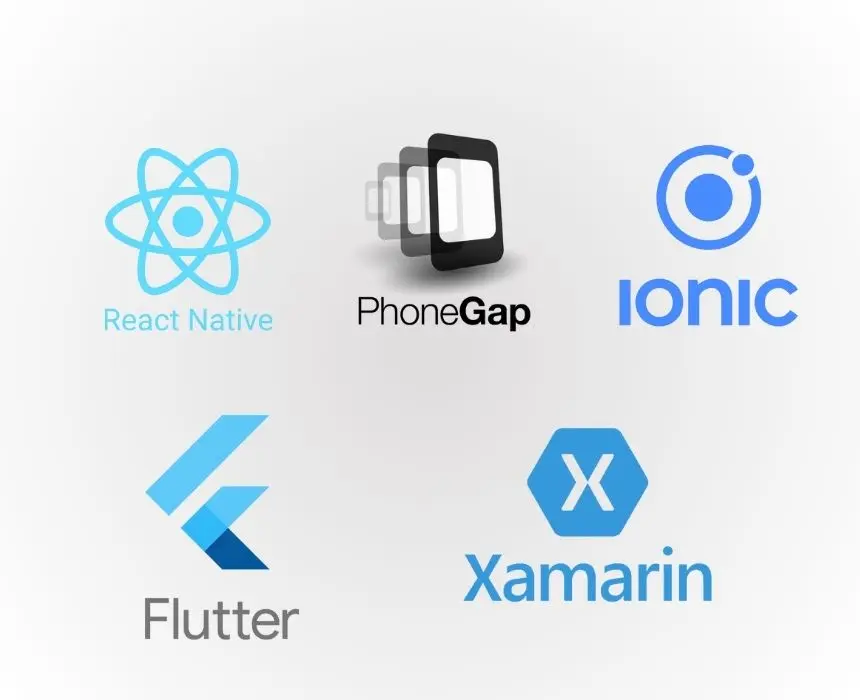
There are many technologies in mobile app development commonly used are Kotlin, Java, Swift, Objective C, React native, flutter etc.
Technologies and business use cases according to platform choice :1. Either Android or iOS 2. On Android and iOS both
Kotlin/Java:
If any business needs mobile app on specifically android platform, then they should go with Kotlin/Java as per business requirements. Java can handle large industry server data, data structuring, mathematical and graphical operations, networking software, IoT or cloud applications whereas Kotlin can develop small or large mobile applications in social media apps, real estate management apps, wearable and IoT apps, telemedicine, fitness and wellness apps and many more. Kotlin is a widespread language and supported in Java libraries as well to construct scalable applications on both Android and iOS.
Swift:
If any business wants to go with apple platforms, then Swift is better option. It is supported on iOS, macOS, watchOS, tvOS, and Linux. Swift is developed in 2014 for apple platforms. Hence for building any application from scratch, swift is a better option as it is more scalable, easy to use and learn and more efficient.
Objective C:
Objective-C has been in use for a long time and has a substantial legacy codebase. As a result, if you are working on an existing iOS app or integrating with older code, Objective-C might be more suitable. Swift, being a relatively new language, is not as commonly used in many older apps.
React Native:
React Native is a mobile application framework which allows you to develop mobile apps on both android and iOS. It supports the same codebase in different platforms. For the business who tend to expand their target audience on android or iOS in future, react native is better option to create application which supports cross platform development.
Flutter:
Flutter is the newest platform launched by google that supports android, iOS as well as windows and Linux based desktop applications. One of the unique advantages of Flutter is its hot reload feature. Which enables us to see real time updates in development without restarting it. It is better for IT application , but SEO integration can be challenging as well as application size may be an issue while going with flutter as development framework.
Till end of 2024 smart phone users around the globe are predicted to 7.1 billion.
Here are some reasons why businesses are investing in mobile application development:
- Mobile apps are handy and easy to explore.
- Better tracking customer and business metrics
- Improved customer experience
- Engaging with customers
Conclusion
In current market, mobile apps have become essential for businesses of all sizes, from small shopkeepers to large enterprises. Advanced technologies like AI, IoT, and cloud computing enable smoother operations and time efficiency, transforming the way businesses function. Mobile apps help streamline processes, enhance customer interactions, and offer real-time data, making them vital for industries like retail, healthcare, and entertainment. By reducing manual tasks and improving user experiences, mobile apps drive growth, efficiency, and innovation across various sectors.
Author
Have Something on Your Mind? Contact Us : info@corefragment.com or +91 79 4007 1108

Related articles