- July 22, 2026
Summarize with AI
Not enough time? Get the key points instantly.
Get summary:
Why Smart Lighting App Development Isn't Just Another IoT App
Your smart bulb pairs fine with one phone in the demo room. Add a second bulb, a third, and a guest who wants to control the living room from their own phone, and the pairing flow that worked for one device starts falling apart. Ship an app that can't handle group control or drops connection the moment Wi-Fi goes down, and support tickets pile up faster than feature requests. This post walks through how to architect the mobile app layer for a smart lighting product - from device commissioning to offline control, so the app scales past the demo case before it ships.
Most IoT mobile apps talk to one device at a time: a wearable, a single sensor, a single gateway. Smart lighting app development is different because a real installation usually means a dozen or more fixtures in one room, grouped into scenes, controlled by more than one person's phone, and expected to keep working even when the internet connection to the cloud goes down.
That combination - many devices, multiple simultaneous controllers, and a hard requirement for local responsiveness is what breaks apps built with a single-device mental model. Naming this early avoids the common failure mode: an app that demos beautifully with one bulb and then falls over during a real installation with fifteen.
Decide How the App Talks to the Fixtures Before You Design Any Screen
The communication path between phone and fixture decides almost everything about app architecture, and it's usually one of three options. Direct BLE works for single-device control but doesn't scale cleanly once you need to control a group without addressing each bulb individually. BLE mesh solves group control by letting fixtures relay messages to each other, so the app only has to reach one node in the mesh to control the whole group. A cloud/Wi-Fi path routes commands through a hub or gateway and a cloud broker, which enables remote control from outside the home but adds a dependency the local-only options don't have.
Communication Path | Group control | Works without Internet | Remote Access |
|---|---|---|---|
Direct BLE | Poor - one connection per device | Yes | No |
BLE Mesh | Strong - built for multi-node relay | Yes | No, unless paired with a bridge |
Cloud/Wi-Fi via hub | Strong, but depends on hub/cloud uptime | No | Yes |
For most residential smart lighting products, BLE mesh lighting control firmware paired with a local hub bridge gives the best of both — mesh handles fast, local group control, and the bridge adds remote access as an optional layer rather than a dependency. Cloud-only architectures should be reserved for products that genuinely need remote access as a core feature, not a convenience.
Pick a Mobile Stack That Can Actually Handle BLE Mesh
The tech stack decision matters more here than in a typical IoT app, because BLE mesh operations - provisioning, group messaging, background reconnection - push harder against platform limitations than a simple Bluetooth-to-one-device connection does.
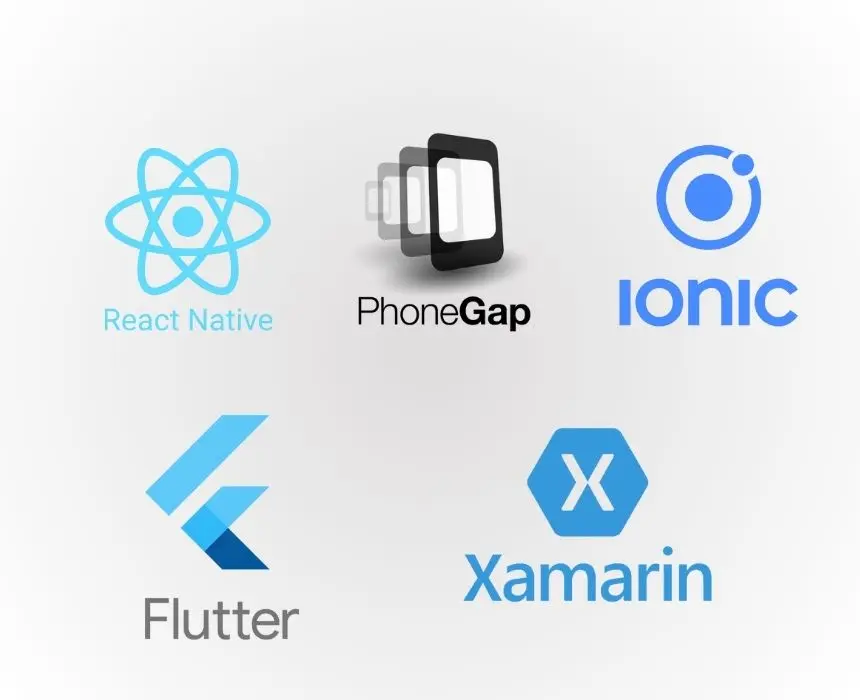
React Native and Flutter both work for the UI layer, but neither ships mature BLE mesh support out of the box - you're integrating a native BLE mesh SDK (from the silicon vendor or a mesh stack provider) through a bridge module either way, so the React Native vs Flutter for IoT apps decision mostly affects screen development speed, not mesh reliability. Native development (Swift/Kotlin) gives direct access to each platform's Bluetooth stack and background execution APIs, which matters most for apps that need mesh operations to keep working with the app backgrounded - something both iOS and Android restrict more aggressively for BLE than for typical network calls.
Stack | BLE Mesh Integration | Background BLE Reliability | Best Fit |
|---|---|---|---|
React Native | Via native module bridge to a BLE mesh SDK | Depends on bridge quality — extra layer to debug | Teams prioritizing one codebase and screen velocity |
Flutter | Via platform channel to native BLE mesh SDK | Same bridging constraint as React Native | Similar priority profile to React Native |
Native (Swift/Kotlin) | Direct SDK integration, no bridge layer | Best — direct access to background execution APIs | Products where background provisioning or reconnection reliability is critical |
For a product where commissioning and group control are core to the experience, native development on at least one platform first is usually worth the extra team overhead, because BLE mesh bugs that only appear through a bridge layer are harder to diagnose than bugs in a direct SDK integration. A cross-platform shell calling into native BLE mesh modules on both sides is a reasonable middle ground once the mesh layer has been proven out natively.
Go native first if background provisioning or reconnection reliability is a launch requirement, not a future improvement
Start cross-platform if the priority is one codebase and faster iteration on screens, with mesh operations handled by a vetted SDK bridge
Budget extra QA time for BLE regardless of stack — Bluetooth stack behavior varies enough across Android OEMs that device-specific testing isn't optional
Design Commissioning So Adding the Sixteenth Bulb Is as Easy as the First
Commissioning is where most lighting apps lose users. BLE mesh provisioning requires the app to authenticate each new device into the mesh network, assign it to the right group, and confirm the join succeeded and doing this reliably for one device is very different from doing it for an installer adding fifteen fixtures in one visit.
Provisioning Approach | Speed for Multiple Device | Failure Visibility | Best Fit |
|---|---|---|---|
One-at-a-time pairing | Slow - each device requires a full flow | High - failures are obvious immediately | Single-bulb consumer products |
Batch queue provisioning | Fast - installer scans multiple devices upfront | Requires per-device confirmation to avoid silent failures | Multi-room or commercial installs |
QR/NFC - assisted pairing | Fast - skips manual Bluetooth discovery | Depends on physical tagging accuracy | Products shipped with pre-labeled fixtures |
Batch-provision where possible - let the installer scan multiple devices before running provisioning as a queue, not one at a time
Confirm join success per device, not just for the batch - a silent failure on device #12 is worse than a slow provisioning flow
Support re-provisioning - a bulb that gets replaced or reset needs a path back into the mesh without re-provisioning the entire room
Apps that treat provisioning as a one-off flow instead of a repeatable, batchable process are the ones installers complain about on commercial jobs.
Build for Local Control First, Cloud as an Enhancement
A smart lighting system architecture that requires a cloud round trip for every light switch toggle introduces latency users notice immediately and a dependency that fails the moment the router reboots. The app should send commands directly to the mesh over BLE or the local hub whenever the phone is on the same network, falling back to cloud-routed commands only when the phone is remote.
State Model | Behavior During Outage | Perceived Responsiveness |
|---|---|---|
Cloud as source of truth | UI shows stale or unreachable state | Slower - every toggle waits on a round trip |
Local mesh as source of truth, cloud syncs async | UI stays accurate; only remote access is affected | Fast - commands apply instantly on the local network |
This local-first approach also determines how the app handles state, and it's a core part of smart lighting app development that teams often add too late instead of designing in from the start. If the source of truth for "is this light on" lives only in the cloud, the app shows stale state the moment connectivity drops. Keeping local mesh state as the primary source, with the cloud syncing asynchronously, keeps the UI accurate even during an outage.
Add the Automation Layer Operators Actually Use
Scenes, schedules, and sensor-triggered automation are what turn a lighting app from a remote control into a product people keep using. Occupancy sensor integration lighting the room correctly - turning on when someone enters, dimming after a timeout with no motion - depends on the app exposing sensor pairing and rule configuration without requiring the user to understand the underlying mesh topology.
An IoT lighting control dashboard for multi-room or commercial installs needs a different design than the consumer mobile app: it has to show device health, group status, and scheduling across many more fixtures than a single household app ever handles. Building both on the same backend API, with different frontends for consumer versus facilities-manager use cases, avoids maintaining two separate data models for the same underlying system.
Pre-Build Checklist: 6 Questions Before You Start the App
Answer these before wireframing any screen:
Does the product need group control across more than a handful of fixtures, or is single-device control enough?
Will installations regularly involve more devices than one person can provision one at a time?
Does the app need to keep working when the home or building loses internet access?
Is remote access (outside the local network) a core feature or a nice-to-have?
Will the same backend need to serve both a consumer app and a facilities dashboard?
What sensor types (occupancy, daylight, ambient light) does the automation layer need to support at launch?
Frequently Asked Questions on Smart Lighting App
What's the difference between BLE and BLE mesh for a lighting app?
Direct BLE connects the phone to one device at a time, which works for single-bulb products but doesn't scale to group control without significant app-side complexity. BLE mesh lets fixtures relay messages between each other, so the app can control an entire group by reaching just one node in the mesh, which is why it's the more common choice for multi-fixture installations.
How does a lighting app handle control when the internet is down?
If the app is architected local-first, commands go directly to the BLE mesh or local hub without needing a cloud round trip, so lights still respond to schedules, scenes, and manual control during an outage. Only remote access - controlling lights from outside the home - depends on cloud connectivity in a well-architected system.
Do we need a separate dashboard for commercial installs, or can the consumer app handle it?
Commercial and multi-room installs typically need an IoT lighting control dashboard built for device health, group status, and scheduling at a scale consumer apps aren't designed for. Building both experiences on a shared backend API is usually more efficient than maintaining two separate systems, even though the frontends differ.
How long does smart lighting app development typically take?
A consumer-facing app covering commissioning, group control, and basic scenes typically takes 10–14 weeks from architecture to a testable release [verify before publishing]. Adding a commercial dashboard, occupancy sensor automation, or multi-hub support extends that timeline depending on how many device types need to be supported.
Should we build the app in-house or hire a smart lighting product development partner?
If your team already has BLE mesh and IoT backend experience, in-house is workable for a single consumer app. Most teams bring in a partner because the combination of mesh protocol knowledge, mobile development, and backend architecture rarely sits inside one existing team and a partner who has built the firmware and the app avoids the handoff gaps that show up when commissioning behavior gets designed twice, once in firmware and once in the app.
Getting the App Layer Right Before You Scale Past the Demo
The app layer is where most smart lighting products either earn user trust or lose it in the first week of real-world use. Smart lighting app development that handles group provisioning, local-first control, and sensor-driven automation from the start avoids the rebuild most teams face once the fifteenth-bulb installation exposes what the one-bulb demo never tested. If you're scoping the app layer for a lighting product and want a second opinion on mesh architecture or commissioning flow before committing to a design, CoreFragment's team can review your requirements and flag the trade-offs early.
Author
Have Something on Your Mind? Contact Us : info@corefragment.com or +91 79 4007 1108

Related articles