- May 27, 2024
Summarize with AI
Not enough time? Get the key points instantly.
Get summary:
How Embedded Advancements Are Affecting the Wearable Trends in 2026
Your prototype worked exactly as expected. Sensors returned clean signals. BLE connected instantly. Battery projections looked promising enough to move forward. From a lab perspective, everything indicated that the product was ready.
Then the device entered real-world usage.
Users didn’t behave like test conditions. They wore the device loosely, tightened it inconsistently, moved across crowded RF environments, and used different phone models with varying OS restrictions. Within days, issues began to surface.
Battery drained faster than projected. BLE disconnected in crowded spaces. Sensor readings became inconsistent depending on wrist position. Firmware that appeared stable during testing started to fail after extended operation.
None of these issues were unexpected. They were simply not accounted for at the embedded level.
Wearable trends in 2026 are no longer shaped by features or UI improvements. They are shaped by how well embedded systems handle variability, constraints, and long-term behavior. The difference between a product that scales and one that fails is determined early often before the first prototype is finalized.
This guide breaks down what is actually changing at the embedded level and how those changes are redefining wearable trends across industries.
Why Wearable Trends Are Now Defined by Constraints, Not Features
A major shift in wearable device development is the move from feature-first thinking to constraint-driven design.
Earlier, teams would define features such as continuous monitoring, real-time sync, or multi-sensor tracking. Engineering would then attempt to optimize systems to support those features. That approach leads to instability.
Modern wearable trends are shaped by constraints from the beginning. Battery size, processing limits, thermal boundaries, and communication overhead define what is feasible.
A wearable device operating on a 150 mAh battery cannot sustain continuous high-frequency sensing and real-time data transmission without trade-offs. Attempting to do so results in either poor battery life or system instability.
The Expanding Role of Low Power Design in Wearables
Low power design has moved from an optimization phase to a core architectural requirement.
Users expect devices to operate for multiple days without charging. This expectation applies even when devices perform continuous sensing, background synchronization, and real-time notifications.
Meeting these expectations requires careful coordination between hardware and firmware.
Microcontroller selection is one of the earliest and most impactful decisions.
The nRF52840 is widely used because it offers a strong balance between power efficiency and BLE performance. It allows developers to manage power consumption effectively while maintaining reliable connectivity.
The ESP32, while more powerful, introduces challenges due to its higher baseline power consumption. In wearable applications, this often results in shorter battery life unless aggressive power management techniques are implemented.
STM32L4 series microcontrollers are designed for ultra-low-power operation. They are particularly useful in medical applications where energy efficiency and reliability are critical.
MCU | Power Efficiency | Connectivity | Processing | Trade-off |
|---|---|---|---|---|
nRF52840 | High | BLE | Medium | Limited compute |
ESP32 | Medium | Wi-Fi + BLE | High | Higher Power Usage |
STM32L4 | Very High | External BLE | Medium | Added complexity |
The key insight is that microcontroller selection influences every downstream decision. It affects firmware complexity, power management strategies, and even PCB design.
Low power wearable tech is not achieved through a single optimization. It is the result of consistent decisions across the entire system.
BLE Reliability Is Still One of the Weakest Links
Connectivity issues remain one of the most common reasons wearable devices fail in real-world usage.
BLE is the preferred communication protocol because it offers low power consumption and compatibility with mobile devices. However, its behavior is highly dependent on external factors.
Different smartphone platforms handle BLE differently. Android devices may restrict background services aggressively, while iOS imposes limits on scanning and reconnection.
These variations introduce complexity that cannot be ignored.
On one wearable deployment, users reported that the device failed to reconnect after moving out of range.
The issue was not related to signal strength. It was caused by the device maintaining an outdated connection state.
The fix required resetting the BLE stack, clearing previous session data, and restarting the advertising process. Without this, the device could not recover from a common usage scenario.
Protocol | Power | Range | Stability | Use Case |
|---|---|---|---|---|
BLE | Low | Short | Medium | Wearables |
Wi-Fi | High | Medium | High | Data-heavy |
LTE-M | Medium | Wide | High | Medical |
BLE continues to define wearable trends because it is the most viable option within power constraints. However, it requires careful implementation to ensure reliability.
Sensor Fusion Is Moving from Enhancement to Requirement
Sensor technology has improved significantly, but raw sensor data is not enough to ensure accuracy.
Wearable devices must interpret data in dynamic environments where motion, placement, and environmental conditions vary constantly.
Sensor fusion combines inputs from multiple sensors to improve reliability.
For example, combining accelerometer and gyroscope data allows systems to differentiate between intentional movement and noise. Adding PPG data provides physiological context.
Approach | Accuracy | Complexity | Reliability |
|---|---|---|---|
Single Sensor | Low | Low | Inconsistent |
Sensor fusion | High | Medium | Reliable |
On one wearable project, step tracking failed when users wore the device loosely. The sensor itself was functioning correctly, but the algorithm could not adapt to variations in motion.
The solution involved refining filtering techniques, adjusting thresholds dynamically, and validating across multiple usage patterns.
Sensor fusion is now a requirement because it enables systems to adapt to real-world variability.
Firmware Architecture Is Becoming the Core Differentiator
Firmware is no longer just a supporting layer. It is the core of wearable performance.
Modern wearable firmware must manage multiple tasks simultaneously, including sensing, communication, power management, and updates.
Real-time operating systems such as FreeRTOS and Zephyr are commonly used to handle these requirements.
Architecture | Strength | Limitation | Use Case |
|---|---|---|---|
Bare metal | Simple | Limited scalability | Basic devices |
FreeRTOS | Flexible | Moderate complexity | Most wearables |
Zephyr | Modular | Learning curve | Advanced systems |
One of the biggest challenges in firmware development is ensuring long-term stability.
A device may perform well during short tests but fail after extended usage due to memory fragmentation or task scheduling issues.
In one case, a wearable device crashed after 48 hours of continuous operation. The issue was traced to inefficient memory allocation and improper task prioritization.
The fix required restructuring tasks, optimizing memory usage, and implementing watchdog timers.
Firmware stability is now a major factor influencing wearable trends because failures often occur over time rather than immediately.
Power Optimization Is About System Behavior, Not Just Components
Power optimization is often misunderstood as a hardware problem. In reality, it is a system-level challenge.
Firmware behavior determines how efficiently energy is used.
Techniques such as duty cycling, deep sleep modes, and interrupt-driven processing allow systems to conserve power while maintaining functionality.
Technique | Impact | Trade-off |
|---|---|---|
Duty cycling | High | Reduced sampling frequency |
Deep Sleep | Very High | Wake latency |
BLE batching | Medium | Data delay |
Edge processing | High | Increased CPU load |
On one wearable system, switching from continuous BLE streaming to batch-based communication significantly reduced power consumption.
This change improved battery life by approximately 30%.
Power optimization is central to wearable trends because it directly affects user experience.
Physical Design Constraints Continue to Limit Possibilities
Wearable devices must operate within strict physical constraints.
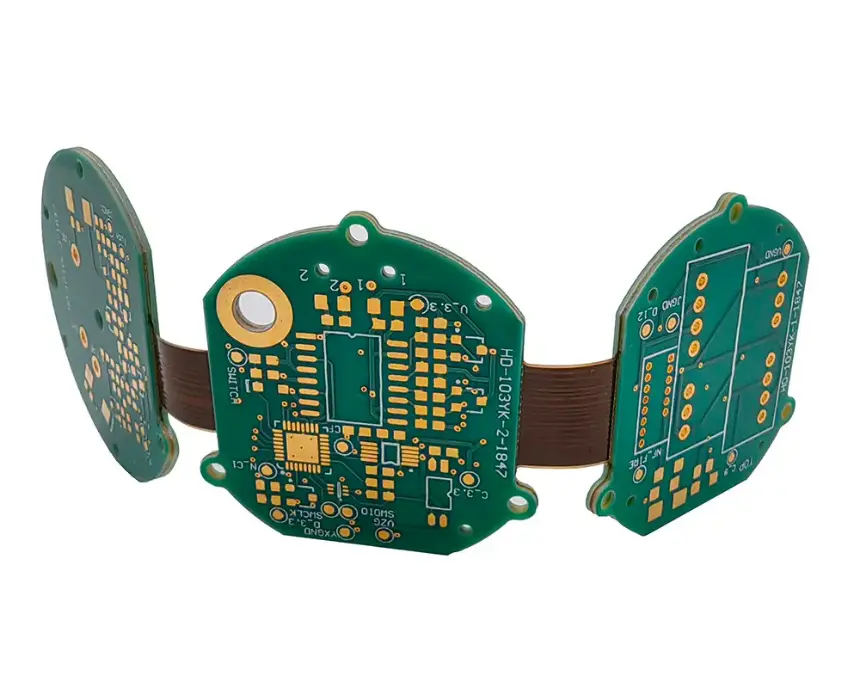
PCB size, antenna placement, and thermal management all influence performance.
Antenna behavior is particularly sensitive in wearables because proximity to the human body affects signal propagation.
Constraint | Impact | Solution |
|---|---|---|
Limited Space | Design restrictions | Multi layer PCB |
Antenna placement | Signal loss | Careful tuning |
Heat | User discomfort | Efficient components |
Noise | Data instability | Shielding |
On one project, BLE performance degraded after enclosure integration.
The issue was caused by antenna detuning due to the casing material.
Fixing it required redesigning the antenna and validating performance under real-world conditions.
Physical constraints remain a defining factor in wearable trends because they limit what can be achieved at the embedded level.
Compliance Is Becoming a Core Engineering Requirement
As wearable devices expand into healthcare and industrial applications, compliance requirements are becoming more stringent.
Standards such as IEC 62304 define software lifecycle requirements for medical devices. FCC and CE certifications ensure compliance for consumer products.
Standard | Impact | Use Case |
|---|---|---|
IEC 62304 | Software lifecycle control | Medical |
FCC/CE | RF compliance | Consumer |
IEC 61508 | Functional safety | Industrial |
Compliance requirements influence architecture decisions early in development. Ignoring them often leads to costly redesigns.
Decision Framework: Aligning with Wearable Trends
Choosing the right architecture requires a structured approach.
Before development begins, teams should evaluate key constraints and requirements.
Requirement | Recommended Approach |
|---|---|
Long battery life | nRF52840 + BLE |
High processing needs | ESP32 |
Medical applications | STM32 |
Continuous sensing | Sensor fusion + RTOS |
This framework helps align product decisions with actual wearable trends.
FAQs on Wearable Trends in 2026
What are the key wearable trends in 2026?
Wearable trends focus on power efficiency, reliable connectivity, and adaptive sensing driven by embedded systems.
Why do wearable devices fail after launch?
Real-world conditions expose issues in power management, BLE stability, and sensor interpretation.
How important are embedded systems in wearables?
Embedded systems control core functions such as sensing, communication, and power management.
What is the biggest wearable firmware challenge?
Managing multiple processes efficiently while maintaining long-term stability.
How do companies choose wearable architecture?
By evaluating constraints such as power, connectivity, and processing before development.
Conclusion
Wearable trends in 2026 are defined by how well devices perform under real-world conditions.
Embedded decisions determine whether products succeed or fail.
Power efficiency, firmware stability, connectivity reliability, and hardware constraints all play a role.
Understanding these factors early helps avoid costly redesigns and ensures that wearable devices perform as expected in real-world environments.
Author
Have Something on Your Mind? Contact Us : info@corefragment.com or +91 79 4007 1108

Related articles