- March 02, 2026
Summarize with AI
Not enough time? Get the key points instantly.
Get summary:
Introduction
Hospitals across India are under pressure to deliver faster care, reduce costs, and improve patient outcomes at the same time. Traditional systems are no longer enough.
That is why they are investing in connected medical devices, real-time monitoring, AI-powered diagnostics, and cloud platforms to improve patient outcomes and reduce operational pressure.
This shift is powered by the Internet of Medical Things (IoMT).
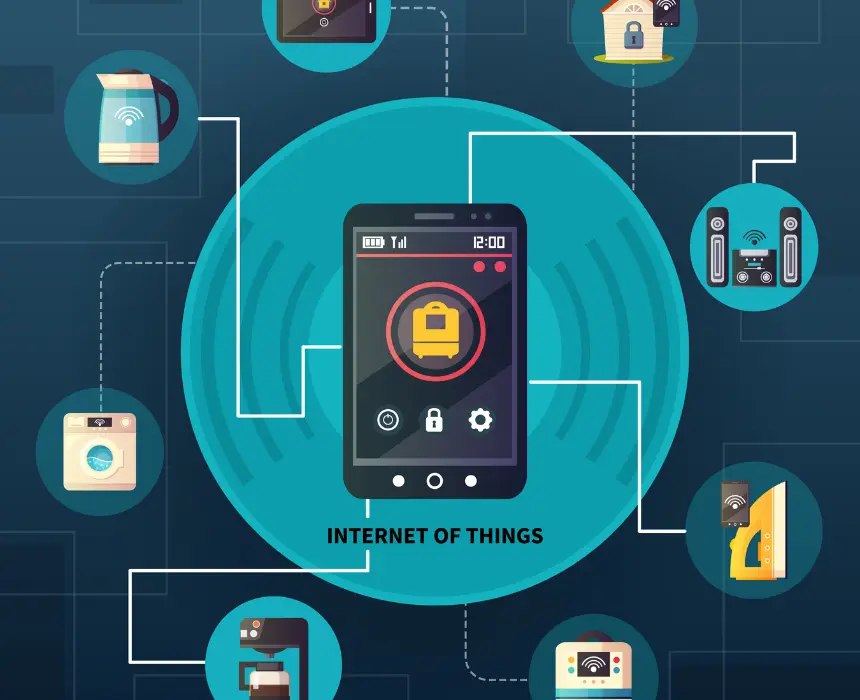
It connects devices, sensors, hospital systems, and patient apps into one intelligent ecosystem. From remote cardiac monitoring and wearable biosensors to smart imaging systems and hospital asset tracking, IoMT enables continuous data flow between patients and providers.
In fact, recent studies show that the global Internet of Medical Things market is expected to reach over $1,906.70 billion by 2034, growing at a CAGR of 44.22%. This clearly shows how fast IoMT is gaining popularity.
The goal is clear. Improve clinical accuracy, reduce costs, and deliver faster decisions using real-time data.
However, implementing IoT in healthcare is not as simple as it seems. It requires technical professionals with healthcare domain expertise, secure architecture, regulatory understanding, and proven integration capabilities.
Smart healthcare organizations are actively looking for the best IoT healthcare companies.
If you are ready to implement IoT but unsure how to choose the right company from thousands of options in the market, you are in the right place.
In this guide, you will explore the top 15 IoT companies in healthcare, the services they offer, and how to find the right partner for your needs.
So, without any further delay, let's dive in!
What is IoMT?
The Internet of Medical Things, or IoMT, is a network of connected medical devices and healthcare systems that share data through the internet. These devices collect patient health information and send it to doctors or hospital systems in real time.
This allows healthcare providers to monitor patients remotely, detect problems early, and make quicker decisions. IoMT also helps hospitals improve efficiency and reduce costs by automating data collection and monitoring processes.
What Type of Solutions Do IoT Healthcare Companies Offer?
IoT healthcare companies build connected tools that help hospitals and clinics monitor patients, manage equipment, and improve daily operations. These solutions use smart devices and software to collect and share health data in real time.
Here are the main types of solutions they provide:
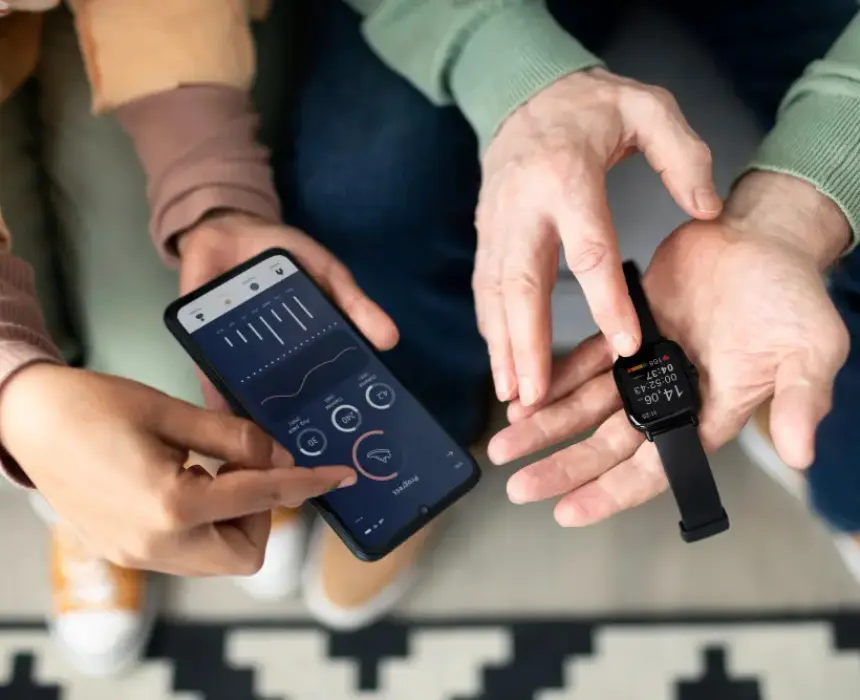
Remote Patient Monitoring: Devices track vital signs like heart rate, blood pressure, oxygen levels, and sugar levels. Doctors can see the data from anywhere and get alerts if something is wrong.
Chronic Disease Management: Smart devices help patients with long term conditions such as diabetes, asthma, or heart problems. Continuous tracking helps doctors adjust treatment early and avoid emergencies.
Smart Hospital Management: Hospitals use sensors to track medical equipment, check medicine storage conditions, and improve staff coordination. This saves time and reduces losses.
Telemedicine Support: Connected devices share live health data during online doctor consultations. This helps doctors make better decisions even when the patient is at home.
Equipment Monitoring and Safety: IoT systems monitor medical machines and send alerts before they break down. Some solutions also help improve hygiene checks and medication reminders.
Emergency Data Sharing: In emergencies, connected devices and ambulances can send patient information to the hospital before arrival. This helps doctors prepare in advance.
Top 15 IoT Healthcare Companies
Here are top pick IoT healthcare companies you can explore and find the right one:
1. CoreFragment: #1 Best IoT Healthcare Company
CoreFragment is a product engineering-focused IoT healthcare company that builds secure, scalable, and production-ready IoMT solutions.
With over 10 years of experience and 100+ successful projects delivered across industries, including healthcare, the company specializes in turning complex device ideas into fully functional, market-ready systems.
Unlike generic software vendors, CoreFragment works across the complete IoT stack for the medical devices. CoreFragment Technologies can handle medical device hardware , firmware to healthcare applications, medical analytics data , AI integration in existing healthcare systems. They had worked on medical wearables development, smart medical devices, patient portals, healthcare IoT mobile application development.
In healthcare IoT, precision and security are critical. CoreFragment builds real-time monitoring systems, device integrations, and data platforms with strong encryption and compliance-ready architecture. Their expertise in protocol-based testing and end-to-end automation ensures stable, production-ready solutions.
From concept and prototyping to full-scale deployment, the team supports the entire product lifecycle. Hospitals and health tech companies work with CoreFragment when they need reliable engineering, not experimentation.
Key Highlights:
10+ years of IoT product engineering experience
100+ successfully delivered projects across the industries
Expertise in healthcare, embedded systems, and AI integration
End-to-end healthcare IoT development from hardware to cloud
Strong focus on security, compliance, and data protection
Proven experience in real-time data processing and enterprise system integration
2. Philips Healthcare

Philips is a global health technology company that builds connected healthcare systems for hospitals and care providers. It develops medical devices, imaging machines, and digital health platforms that work together through IoT.
Its connected patient monitoring systems allow doctors to track health data in real time, whether the patient is in the hospital or at home. This helps improve diagnosis and supports faster treatment decisions.
Philips also uses AI and data analytics to predict health risks, improve workflow, and support better clinical decisions. The company works closely with hospitals to create fully connected care environments.
With strong experience in large-scale hospital integration, Philips builds connected ecosystems that improve operational efficiency and patient outcomes.
Key Highlights:
Enterprise-level IoT healthcare solutions
IoT-powered patient monitoring and tracking systems
Advanced medical imaging and diagnostic platforms
Remote monitoring and telehealth integration
AI-driven predictive healthcare analytics
Strong focus on data integration and clinical decision support
3. Siemens Healthineers
Siemens Healthineers is a global technology company with roots dating back to 1847. Headquartered in Germany, it is a major player in medical imaging, diagnostics, and digital health solutions.
The company uses IoT and AI to connect medical devices, hospital systems, and cloud platforms. Its solutions help hospitals improve workflows, monitor patients remotely, and predict equipment issues before breakdowns happen.
Siemens also offers cloud-based platforms like MindSphere to collect and analyze healthcare data. Its Digital Twin technology creates virtual models of medical equipment, helping hospitals improve performance and maintenance planning.
With strong expertise in automation and smart infrastructure, Siemens builds connected hospital environments that improve patient care and operational efficiency.
Key Highlights:
IoT-enabled imaging and diagnostic systems
Cloud-based healthcare data analytics
AI-powered predictive healthcare solutions
Digital Twin technology for equipment optimization
Smart hospital and infrastructure solutions
4. AJProtech

AJProTech is a hardware and IoT product development company based in Los Angeles, California. The company helps startups and enterprises turn new product ideas into real electronic devices that can be manufactured and sold in the market.
AJProTech focuses on building smart devices and connected IoT products such as wearables, smart home devices, consumer electronics, and industrial IoT systems. Their engineers work on hardware design, embedded software, connectivity, and mobile apps so that devices can collect data and communicate with cloud platforms or smartphones.
AJProTech has delivered dozens of commercial hardware products and helped manufacture hundreds of thousands of devices used in industries like healthcare, sports technology, industrial IoT, and consumer electronics.
Key Highlights:
Specializes in IoT device engineering and connected hardware development
Provides end-to-end product development from idea to mass manufacturing
Builds consumer electronics, wearables, smart home, and industrial IoT devices
Supports rapid prototyping to quickly test and validate product ideas
Designs devices using Bluetooth, Wi-Fi, LoRa, and other wireless connectivity technologies
Helps companies optimize products for manufacturing, cost control, and scalability
5. The Ninehertz
The NineHertz provides IoT development services that help healthcare organizations build connected medical systems using sensors, wearables, and cloud platforms. Their solutions focus on improving patient monitoring, hospital operations, and medical device management through real-time data collection and intelligent analytics.
The NineHertz builds IoT systems that collect patient vital data from wearable devices or sensors and send it to cloud dashboards for doctors. This allows healthcare providers to monitor patients remotely, detect abnormal health conditions early, and reduce hospital visits.
Key Highlights:
15+ years of experience in software and digital product development
450+ technology experts across development and engineering teams
1,800+ successfully delivered projects worldwide
Expertise in IoT solutions including connected healthcare and wearable integrations
Experience working with startups, enterprises, and global brands across multiple industries
Strong capabilities in emerging technologies such as AI, cloud computing, AR/VR, and blockchain
Global client base across the US, Europe, Australia, and the Middle East
6. Sumatosoft
SumatoSoft is a software development company that helps businesses build custom software, IoT systems, and AI-powered applications. The company works with startups and enterprises to create digital products that solve business problems and improve operations.
Their engineers design systems that connect devices, applications, and cloud platforms, allowing businesses to collect data, automate workflows, and monitor operations in real time. For example, IoT solutions built by SumatoSoft can connect multiple devices, gather data from sensors, and show useful insights through dashboards and analytics tools.
With more than a decade of experience, SumatoSoft has delivered hundreds of custom software solutions for companies in over 25 countries, supporting industries such as healthcare, manufacturing, logistics, and retail.
Key Highlights:
Builds custom software products for startups and enterprises
Develops IoT systems that connect devices, collect data, and enable real-time monitoring
Supports MVP development and full product engineering for digital platforms
Offers IoT consulting, device integration, and cloud infrastructure development
Provides AI, machine learning, and predictive analytics solutions
7. Nextware Technologies

Nextware Technologies is a technology company based in Santa Monica that helps businesses build software, mobile apps, and connected IoT solutions. Their engineers design systems that allow companies to collect data, automate processes, and run their operations smoothly with modern technology.
The company builds custom software, mobile applications, cloud systems, and IoT platforms for businesses of different sizes. These systems help organizations connect their apps, devices, and data so information flows easily between teams and customers.
Key Highlights:
Builds custom software, web platforms, and mobile applications
Develops IoT solutions that connect devices, apps, and cloud systems
Provides cloud services, infrastructure management, and system integration
Helps companies automate business processes and improve operations
Offers IT consulting, outsourcing, and technical development services
8. PureSoftware Ltd
PureSoftware is a global technology company based in Noida that helps businesses build digital platforms, software products, and connected technology systems. The company works with industries like banking, healthcare, telecom, retail, and gaming to modernize their technology and improve digital services.
PureSoftware builds systems that combine cloud platforms, artificial intelligence, automation, and IoT to help organizations run smarter digital operations. These systems allow companies to collect data, automate tasks, and improve customer experiences through connected applications.
Key Highlights:
Builds digital engineering solutions and enterprise software platforms
Uses AI, automation, cloud, and IoT technologies to modernize business systems
Provides application development, modernization, cybersecurity, and digital transformation services
Has global teams across regions including India, USA, UK, Mexico, and Southeast Asia to support enterprise clients.
9. KORE Wireless
KORE Wireless is a US-based, publicly traded IoT company founded in 2002. It specializes in device connectivity, automation, and IoT platform management.
In healthcare, KORE builds solutions for remote diagnostics, mobile personal emergency response systems, and home care monitoring. Its platforms enable secure data transmission between patients, devices, and providers.
The company also supports IoMT cloud migration and application re-platforming, helping healthcare organizations modernize legacy systems and scale connected services.
With 20+ years of IoT experience, KORE delivers reliable connectivity and automation for healthcare operations.
Key Highlights:
Remote diagnostics and emergency response solutions
Home care and remote monitoring integration
IoMT cloud migration and platform modernization
Strong expertise in healthcare automation and connectivity
10. Very
Very is a technology company from the New York that builds AI-powered software, connected devices, and IoT platforms for businesses. The company was founded in 2011 and focuses on helping organizations turn their ideas into smart connected products.
Very works across the entire product stack — from hardware design and embedded systems to cloud platforms, mobile apps, and AI analytics. This allows companies to build devices that can collect data, connect to the internet, and automatically analyze information.
The company has delivered 400+ technology projects and focuses on building scalable IoT ecosystems that combine hardware, software, and data science.
Key Highlights:
Builds AI-powered IoT products and connected device platforms
Provides hardware engineering, embedded software, and cloud infrastructure
Uses data science and machine learning to turn device data into insights
Helps companies move from prototype to large-scale connected products
Delivers end-to-end IoT development from hardware to cloud applications
11. Toobler Technologies
Toobler is an IoT development company that builds custom healthcare solutions starting from projects above $25,000. It helps hospitals create connected systems for remote patient monitoring, medical data tracking, and inventory management.
The company develops mobile apps, web platforms, and cloud-based IoT systems that securely handle large amounts of healthcare data. Its solutions allow healthcare teams to monitor operations and access real-time information from any location.
Toobler also works on digital twin technology to improve system performance and planning.
In one of its IoT projects, the company built an automated inventory management system that reduced material replenishment time by 60% and improved warehouse efficiency by 45%. The solution was deployed across facilities covering over 9,000 square meters.
Key Highlights:
Custom IoT solutions for healthcare
Remote patient monitoring and data analytics
Cloud integration and digital twin capabilities
Mobile and web application development
Proven impact with 60% faster replenishment and 45% higher inventory efficiency
12. ScienceSoft
ScienceSoft is a global IT consulting company with strong expertise in healthcare technology. It builds secure and scalable IoT solutions for hospitals and healthcare providers.
In healthcare, ScienceSoft develops connected healthcare applications such as remote patient monitoring platforms, telemedicine software, and AI-powered diagnostic tools. These systems help doctors access real-time patient data and make informed treatment decisions.
The company also builds solutions for electronic medical records, patient registration, and prescription management. Its cloud-based platforms ensure smooth data integration and workflow automation.
ScienceSoft places strong emphasis on cybersecurity and regulatory compliance, making it a dependable partner for healthcare organizations undergoing digital transformation.
Key Highlights:
IoT-enabled healthcare software development
Remote patient monitoring and telemedicine solutions
AI-driven medical analytics
Cloud-integrated health data platforms
Strong focus on compliance and data security
13. LANARS
LANARS is a European IoT company founded in 2016, with headquarters in Oslo and offices across Europe. The company focuses on building connected products that combine hardware and software under one system.
LANARS specializes in IoT, Industrial IoT, embedded systems, and PCB design. It develops both the physical devices and the software platforms needed to run them.
In healthcare, LANARS builds smart medical devices, remote patient monitoring systems, and cloud-connected health platforms. Its solutions allow hospitals to track patient data in real time and automate clinical workflows.
The company also provides wireless connectivity and telemedicine support to improve healthcare delivery and operational efficiency.
Key Highlights:
End-to-end hardware and software development
Embedded systems and PCB design expertise
Remote patient monitoring and telemedicine solutions
Cloud-connected healthcare data platforms
Focus on automation and real-time data tracking
14. CONTUS Tech
CONTUS Tech helps healthcare organizations move from traditional systems to connected digital care. Founded in 2008, the company builds IoT-powered platforms that support telehealth, remote monitoring, and smart hospital operations.
It develops systems that track patient vitals in real time, automate clinical tasks, and improve communication between care teams and patients. Its cloud-based platforms and AI tools help hospitals manage health data securely and efficiently.
CONTUS also creates wearable apps and custom healthcare software using modern IoT technologies. The focus is on building scalable systems that improve patient experience and streamline hospital workflows.
Key Highlights:
IoT-based telehealth and remote monitoring systems
AI-driven healthcare analytics
Cloud-integrated data management platforms
Wearable app and custom healthcare development
Focus on workflow automation and efficiency
15. OSP Labs
OSP Labs is a healthcare-focused technology company founded in 2009. With more than 13 years of experience and 200+ clients served, the company builds digital systems that help medical organizations operate more efficiently.
It specializes in healthcare software development, EHR and EMR integration, telemedicine platforms, and remote patient monitoring solutions. OSP Labs also supports revenue cycle management and healthcare cloud migration to modernize legacy systems.
In the IoT healthcare space, OSP Labs develops AI-driven platforms for real-time patient data tracking, predictive analytics, and automated medical workflows. Its solutions help hospitals improve data accuracy, streamline billing, and enhance patient engagement.
The company is ISO 9001:2015 and ISO 27001 certified and has delivered over 700 custom healthcare systems, showing a strong focus on quality and security.
Key Highlights:
13+ years of healthcare expertise
200+ clients served and 700+ custom systems delivered
EHR and EMR integration specialists
Remote patient monitoring and telemedicine platforms
AI-powered healthcare analytics
ISO certified with a strong compliance focus
These are the 15 best IoT healthcare companies you can consider.
Factors to Consider While Choosing the Right IoT Healthcare Company
Here are some key factors to consider while choosing from the best IoT healthcare companies:
Security and Compliance: Patient data must be fully protected. Choose a company that uses strong encryption, secure device authentication, and follows healthcare regulations such as HIPAA or GDPR.
Proven Healthcare Experience: The partner should have real healthcare IoT projects in their portfolio. They must understand hospital workflows, medical device integration, and regulatory challenges.
End-to-End IoT Expertise: IoT involves hardware, firmware, connectivity, cloud platforms, mobile apps, and dashboards. Work with a company that can manage the full ecosystem, not just one layer.
Strong Data and Analytics Capabilities: The solution should handle large volumes of real-time data and provide clear insights that help doctors make faster and more accurate decisions.
Seamless Integration: Make sure the system integrates smoothly with EHR, hospital software, and third-party applications without disrupting operations.
Scalability and Performance: The platform should support growth from a few connected devices to thousands while maintaining stable and reliable performance.
Transparent Pricing and ROI: Look for clear pricing without hidden costs. Focus on long term value, operational savings, and measurable return on investment.
Long Term Support and Maintenance: IoT systems require continuous updates, monitoring, and troubleshooting. Ensure the company offers ongoing technical support and proactive maintenance.
Why Healthcare Organizations Trust CoreFragment for IoT Solutions?
When patient safety and reliability matter, healthcare organizations need an engineering partner who truly understands healthcare and IoT at scale.
That is where CoreFragment stands apart.
With 10+ years of IoT product engineering experience and 100+ successful projects delivered, CoreFragment builds production-ready healthcare systems, not experimental solutions.
Why do businesses choose CoreFragment:
End-to-end IoT expertise
Secure and compliance-ready architecture
Real-time monitoring and protocol integration
Thorough testing and automation
Complete lifecycle support
Ready to build a secure and scalable healthcare IoT solution?
Book a free consultation with our IoT experts today for healthcare IoT product engineering.
Conclusion
IoMT is no longer a future concept. It is already transforming how hospitals monitor patients, manage equipment, and make clinical decisions.
From remote monitoring and smart devices to predictive analytics and cloud platforms, IoT is helping healthcare providers improve efficiency while reducing costs. It enables early detection, better chronic disease management, and smoother hospital operations.
However, successful implementation requires more than technology. It demands strong security, regulatory compliance, seamless integration, and long-term scalability.
If you are planning to adopt IoT in healthcare, then it is important to find the right IoT expert in healthcare.
We hope this guide helps you explore the 15 best IoT healthcare companies, and now it is your turn to evaluate them, consider the given factors, and find the right one.
Have Something on Your Mind? Contact Us : info@corefragment.com or +91 79 4007 1108

Related articles