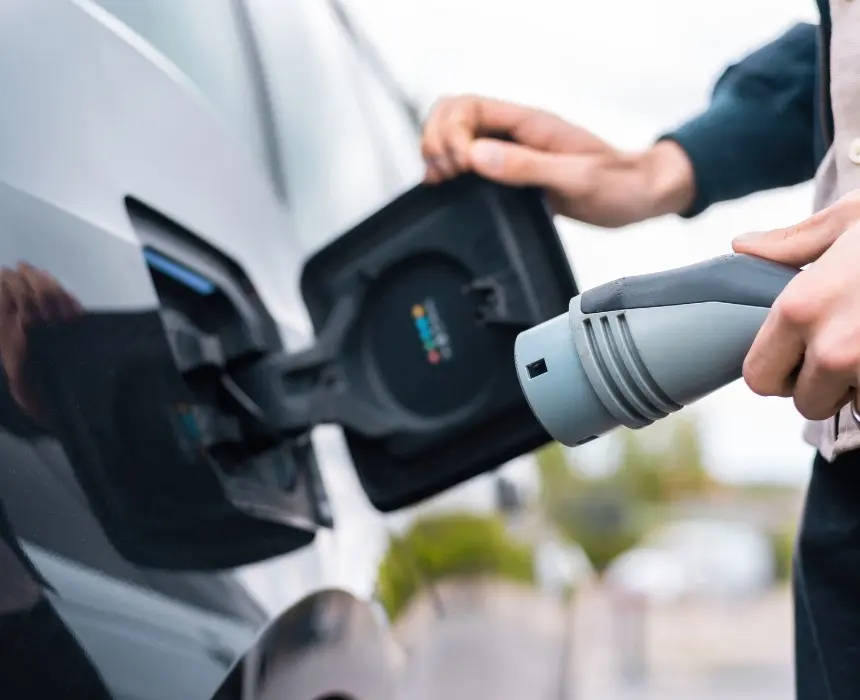
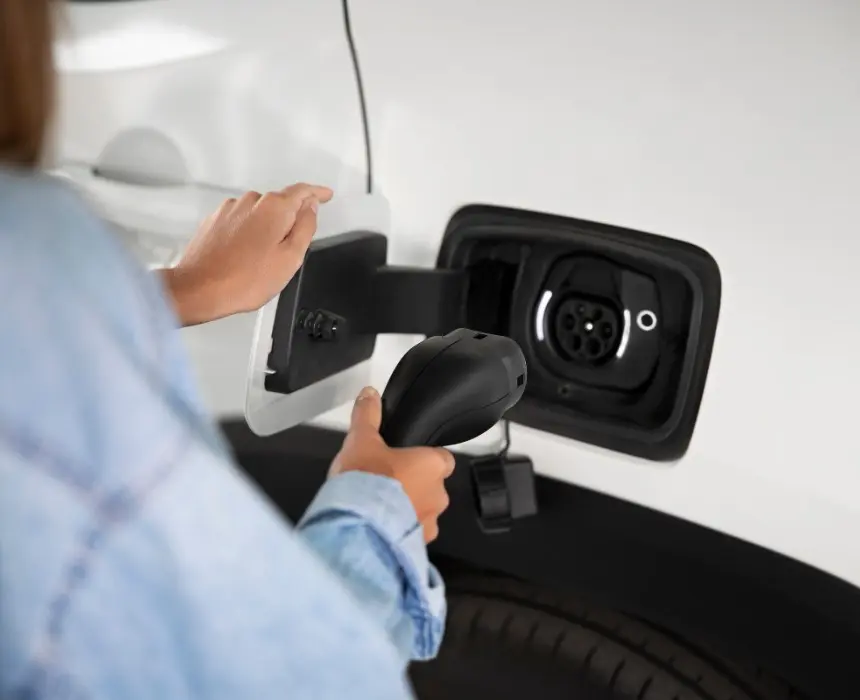
CoreFragment Technologies delivers a complete EV charging technology system customized for OEMs and charging infrastructure providers. Our cloud platform integrates all charging stations, offering smart ev charging network management and hassle-free connectivity for efficient operations.
In addition to network integration, CoreFragment provides energy usage analytics, billing records, OCPP integration, and BMS design and development. This comprehensive solution allows clients to optimize their charging infrastructure, streamline processes, and improve the user experience.
With a modular and scalable approach, CoreFragment Technologies offers a smart EV charging infrastructure system that evolves with changing needs, promoting the adoption of sustainable mobility solutions and supporting future growth in the electric vehicle and sustainable transportation sector.
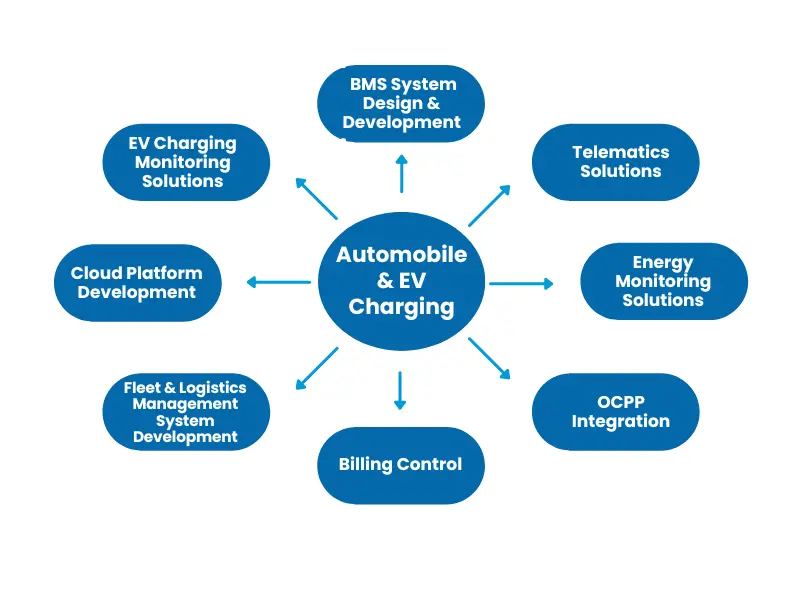
Corefragment Technologies supports EV charging ecosystem by offering connected charging networks for monitoring and optimizing energy usage.
Managing an electric vehicle fleet requires more than adapting a conventional fleet management system — EVs introduce battery state of charge as a critical operational variable alongside location and schedule. Fleet managers need to know not just where each vehicle is but whether it has sufficient range to complete its next assignment, when and where it needs to charge, and how battery health is trending across the fleet. We build EV fleet management platforms covering real-time vehicle tracking, battery SoC monitoring, intelligent route and charge scheduling, driver behaviour analytics, predictive maintenance alerts, and integration with existing ERP and dispatch systems. We have built fleet management software for commercial EV fleets, last-mile delivery operators, and public transit operators managing hundreds of vehicles across multiple depots.
EV charging infrastructure software is more complex than a payment terminal with a plug. Charge point operators need to manage dynamic load balancing across stations sharing a single grid connection, handle OCPP 1.6 and 2.0 communication with chargers from multiple hardware vendors, implement OCPI for roaming interoperability with other charging networks, process payments, issue RFID and app-based authorisation, and give drivers real-time station availability and session status. We build EV charging management platforms covering charge point onboarding and remote management, smart charging with load management and demand response, billing and payment processing, roaming integration, and driver-facing mobile apps and station finder services.
A battery management system is the software layer that determines whether an EV battery pack operates safely, efficiently, and for its full design life — or whether cells go out of balance, operate outside safe voltage and temperature windows, and age prematurely. We develop BMS firmware covering cell voltage and temperature monitoring at the required sampling rate, state of charge estimation using coulomb counting and Kalman filter algorithms, state of health tracking and capacity fade modelling, active and passive cell balancing control, thermal management integration, and CAN bus communication to the vehicle control unit. We develop BMS software for Li-ion, LFP, and NMC chemistries across two-wheeler, commercial vehicle, and stationary energy storage applications.
Telematics systems that collect vehicle data but can not turn it into operational decisions are not worth the hardware cost. We build connected vehicle and telematics software that ingests GPS position, CAN bus vehicle data, OBD-II diagnostics, and driver behaviour metrics - processes and contextualises data at the edge to minimise cellular data costs and surfaces actionable information through fleet operator dashboards and mobile applications. We have built telematics backends handling millions of data points per hour from large vehicle fleets, covering real-time position tracking, geofencing and alerts, trip logging, fuel and energy consumption analysis, predictive maintenance, and driver scoring.
Software-defined vehicles need to receive firmware and software updates in the field without requiring a workshop visit and a failed OTA update that bricks a vehicle controller or a charging station is an expensive outcome that an unreliable update system creates. We architect and build OTA update pipelines for automotive and EV applications covering encrypted firmware packages with cryptographic signature verification, A/B partition failover with automatic rollback on failed boot, differential updates to minimise cellular data transmission, campaign management for staged rollouts to vehicle subsets, and real-time update status tracking across the fleet. We have built OTA systems for EV battery management controllers, charge point firmware, and fleet telematics devices.
EV drivers and fleet operators increasingly manage vehicle interactions through mobile applications — locating and initiating charging sessions, monitoring vehicle range and battery health, receiving service alerts, and controlling connected vehicle features remotely. We build automotive and EV mobile apps for iOS and Android using React Native and native Swift and Kotlin - covering charge session management with real-time progress and cost display, range planning with charging stop recommendations, remote vehicle access and pre-conditioning, fleet operator dashboards for mobile-first field management, and charging network apps with map-based station discovery, RFID registration, and payment management.
We build automotive and EV software across the full system - from embedded BMS firmware and vehicle network integration through cloud backends and operator applications. Most teams can handle one layer. We handle all of them, in parallel, as a single coordinated team.
CAN bus data arrives at 500kbps with mixed message formats across ECUs from different suppliers. OBD-II provides a standardised but limited diagnostic window. BMS data has the sampling frequency and precision requirements of a safety-critical system. We design data acquisition and processing systems that handle these sources correctly from the start - not systems that assume clean, well-structured data and break on the first real vehicle.
OCPP 2.0.1 is a 400-page specification. The gap between reading it and successfully implementing a multi-vendor OCPP backend that handles firmware updates, smart charging profiles, and roaming authorisation correctly in production is significant. We have production OCPP and OCPI implementation experience with real charger hardware from multiple vendors and understand the implementation quirks that the specification does not mention.
Vehicles operate in areas with poor or no cellular coverage. Charging stations are often in car parks and underground facilities where signal is degraded. Software that requires constant cloud connectivity to function is not acceptable in automotive deployments. We design offline-first architectures — edge processing on the vehicle or charger, local state management, and sync-on-reconnect - as the default, not as a later optimisation.
BMS development, smart charging load management, and EV fleet energy optimisation all require genuine understanding of battery electrochemistry, grid tariff structures, and energy management principles not just software engineering applied to a new domain. Our EV engineers bring both software depth and energy systems knowledge to every engagement.
A fleet management platform designed for 50 vehicles breaks at 5,000. A charging platform designed for one hardware vendor breaks when the second vendor chargers behave differently. We design automotive and EV software for the scale and diversity your system will reach — not just for the initial deployment.
Your vehicle software, firmware, platform architecture, and operational data are your IP. We sign a mutual NDA before any technical discussion and transfer the complete deliverable package at project completion. We retain nothing.
We offer embedded system development, IoT development, AI development and App development services.
We develop custom hardware, from schematic design to layout design, BOM optimization, EOL management and hardware design review.
More DetailsWe develop custom IoT firmware, OTA integration, linux and RTOS based development, BSP development, hardware-firmware integration, kernel and bootloader development.
More DetailsWe develop custom IoT hardware, IoT firmware, IoT apps and AIoT integration services.
More DetailsWe develop custom mobile app in IoT, wearables, healthcare in android, iOS and cross platform.
More DetailsWe develop custom web app for industries like healthcare, manufacturing, consumer electronics products etc.
More DetailsWe offer custom AI development, ML applications and embedded-AI integration.
More DetailsWe follow a structured, milestone-driven development process from technical discovery to production deployment - covering embedded systems, cloud backends, and applications in parallel so the full system works end-to-end before it reaches a vehicle or a charging site.
1
Your first call is with a software engineer who understands automotive and EV systems — not a project manager. We map your vehicle type, fleet size or charging network scale, existing hardware and connectivity infrastructure, CAN bus or OBD-II data availability, cloud platform relationships, and the specific operational problems the software needs to solve. We come out of discovery with a documented system architecture that your engineering and operations teams can review before development begins.
2
We define the full system architecture - embedded software layer, vehicle-to-cloud connectivity, data ingestion pipeline, cloud backend, and application layer and build a proof of concept validating the riskiest technical assumptions before full development. For BMS work: algorithm accuracy against your cell chemistry data. For charging platforms: OCPP handshake and session flow against real hardware. For telematics: CAN bus data acquisition throughput and edge processing feasibility.
3
BMS firmware, telematics ECU software, OTA bootloader, and CAN bus communication layers are developed in parallel with cloud and application work - with integration testing on real vehicle hardware or hardware-in-the-loop simulators at every sprint rather than a single integration attempt at the end of development.
4
Telematics ingestion backend, charging network management platform, fleet management database, data pipeline, API layer, and real-time dashboard infrastructure are built alongside embedded development — with API contracts agreed before either team begins implementation and integration checkpoints at every sprint.
5
End-to-end testing in realistic operating conditions — real vehicles on real routes, real charge sessions on real hardware, telematics data at production vehicle counts, OTA update delivery and rollback under degraded connectivity. We test the failure modes that appear in the field: intermittent cellular connectivity, extreme temperature operation, simultaneous charge session concurrency, and edge cases in battery cell behaviour.
6
Production deployment, operator training documentation, and a structured post-launch support arrangement covering firmware updates, software patching, performance monitoring, and feature development as your fleet or charging network scales. Automotive software does not stop at launch - it evolves with your operational requirements.
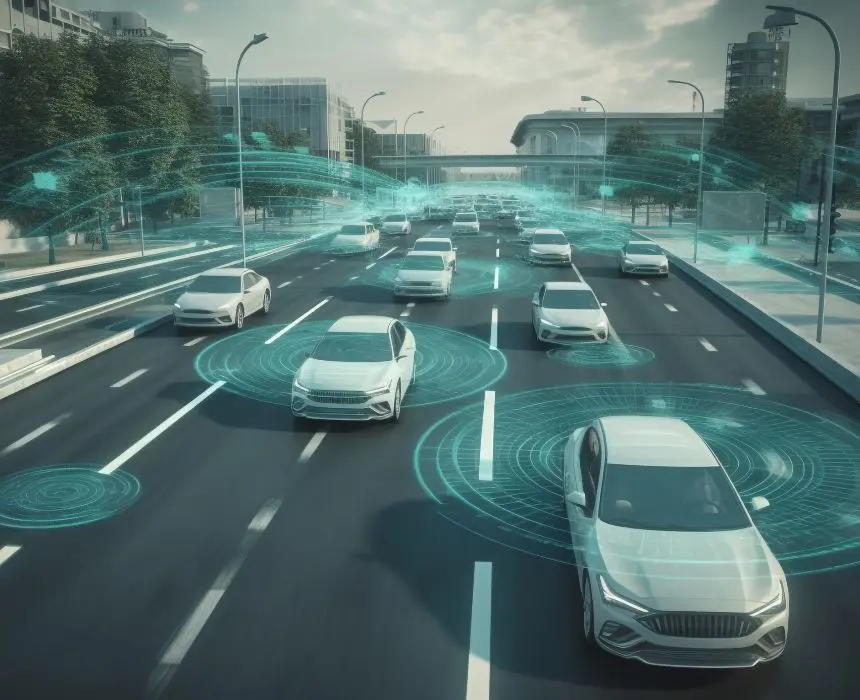
The cloud platform enables centralized monitoring and control of charging stations, allowing real-time data analysis and efficient operations across the network.
Our EV charging solutions will help you to drive the adoption of sustainable mobility solutions by optimizing charging infrastructure and promoting electric vehicle use by integrating IoT and EV charging protocols along with analytics.
OCPP (Open Charge Point Protocol) integration allows interoperability among different charging stations and networks, facilitating seamless communication and management of charging infrastructure.