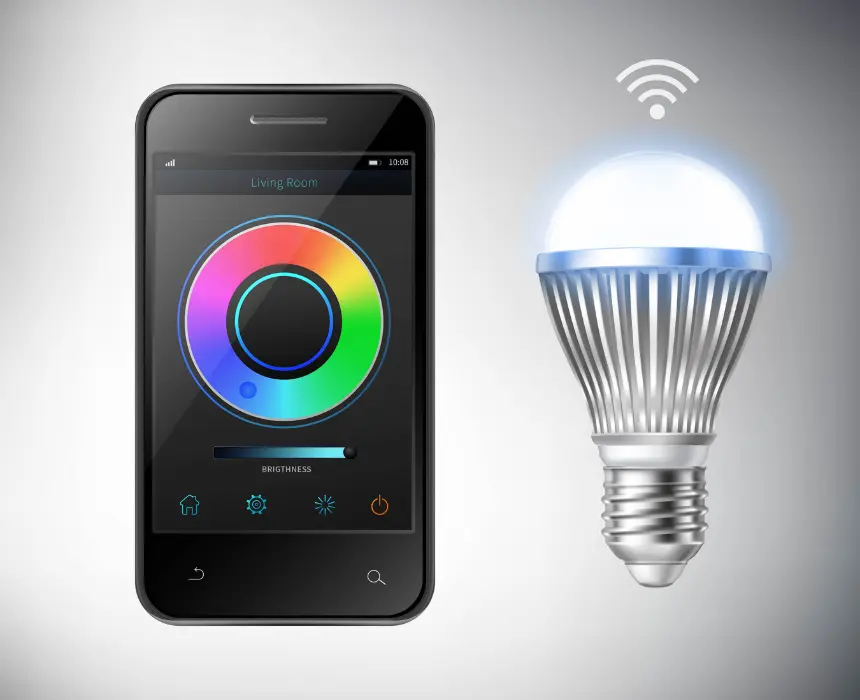
CoreFragment Technologies enables seamless control of smart devices in homes and businesses through integrated IoT systems. Our expertise allows users to manage music, lighting, security, and climate effortlessly from their phones or tablets, making everyday tasks more convenient.
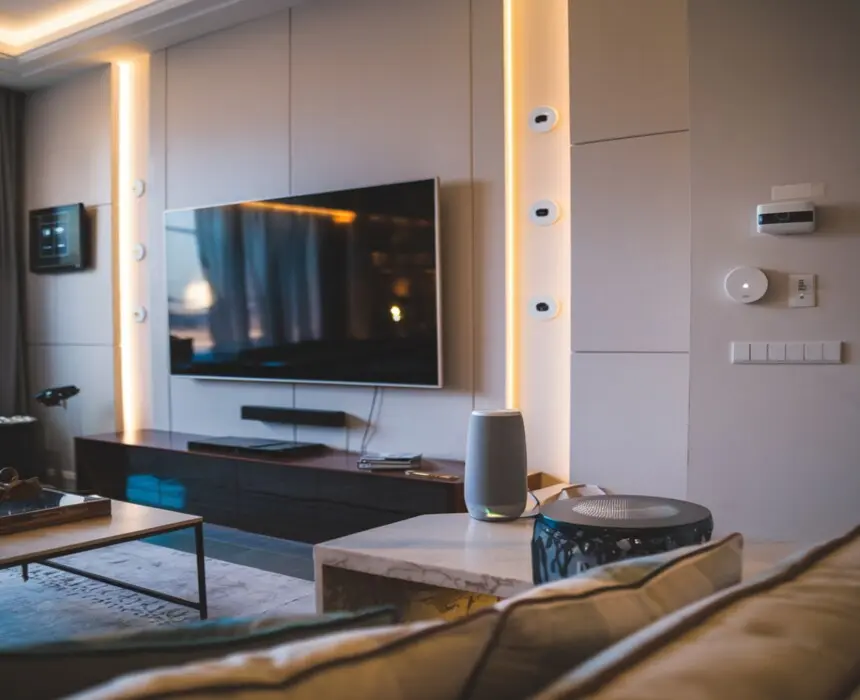
Our home automation systems development expertise focus on enhancing comfort and security. CoreFragment Technologies works in areas like smart home hubs, security systems, smart lighting, climate monitoring, and agriculture automation, ensuring comprehensive smart home experiences.
To further elevate and enhance user experience, CoreFragment Technologies integrates AI and voice assistants like Alexa and Google Assistant providing intuitive control over various systems and adding an extra layer of convenience and functionality to their solutions as per user requirements.

Corefragment Technologies specializes in smart home solutions from cloud and mobile integration to automating home appliances and consumer products.
Smart home products live or die on the user experience they create on day one — the pairing flow, the response latency, the reliability of automation rules that fire correctly at 2am without supervision. We develop smart home products end-to-end: hardware design with antenna placement and power management optimised for mains and battery operation, firmware on ESP32, Silicon Labs EFR32, and Nordic nRF52 platforms, protocol integration across Wi-Fi, BLE, Zigbee, Thread, and Matter, and cloud backends on AWS and GCP that manage device provisioning, shadow state, OTA updates, and rule execution. We have built smart thermostats, security cameras, smart locks, lighting controllers, energy monitors, and multi-sensor hubs.
Smart lighting is one of the highest-adoption entry points into the smart home and one of the hardest categories to get right. Dimming curves that feel natural, colour temperature transitions that happen without flickering, group synchronisation that fires within milliseconds, and voice commands that respond reliably the first time require careful firmware design and a well-architected cloud backend. We develop smart lighting products from hardware through companion app — LED driver design and thermal management, firmware on Silicon Labs EFR32 and ESP32 platforms with Zigbee 3.0 or Matter connectivity, hub and bridge integration, scene management and circadian lighting logic, and companion apps with per-room and whole-home control. We have built smart bulbs, LED strip controllers, smart dimmer switches, and commercial lighting control systems.
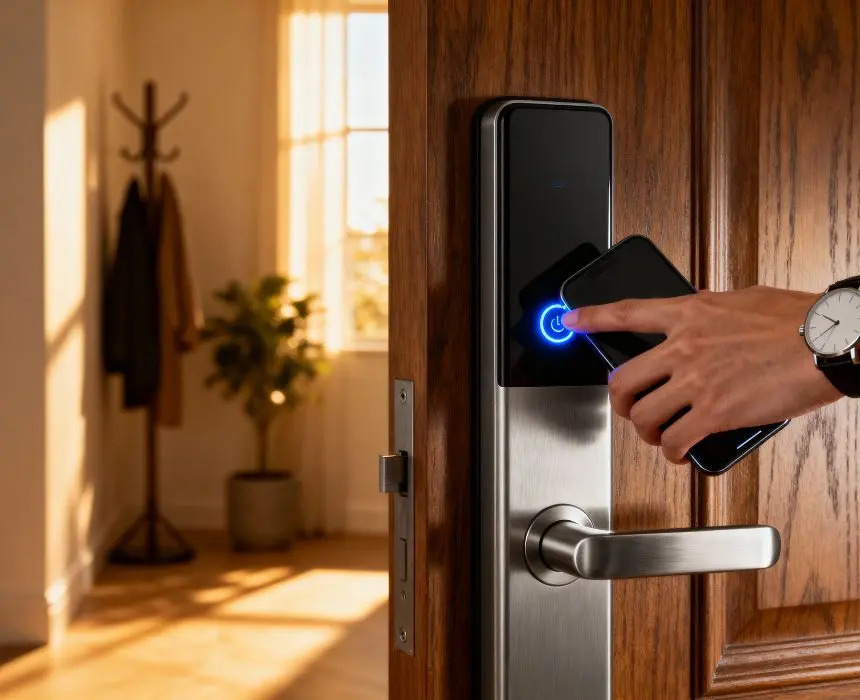
Smart surveillance systems - security cameras, video doorbells, smart locks, motion sensors, and alarm panels — need to process video reliably, trigger alerts with low false-positive rates, and give homeowners and facility managers accurate situational awareness rather than a flood of irrelevant notifications. We develop smart surveillance products and systems covering camera firmware with on-device AI inference for person and vehicle detection, secure video streaming and cloud storage pipelines, smart lock firmware with BLE and Wi-Fi connectivity, motion and door sensor integration, and companion apps with live view, event history, and push notification management. We have built consumer security cameras, commercial access control systems, and multi-site facility surveillance platforms.
A smart home with five devices from five different vendors and five different apps is not a smart home - it is five IoT devices. We build home automation platforms and hub software that bring multi-vendor devices under unified control: protocol translation layers that normalise Zigbee, Z-Wave, Matter, and Wi-Fi device data into a common schema, rule engines that trigger automations based on time, sensor state, location, and multi-condition logic, and a single companion app that manages every device in the home without requiring the user to understand the underlying protocol complexity.
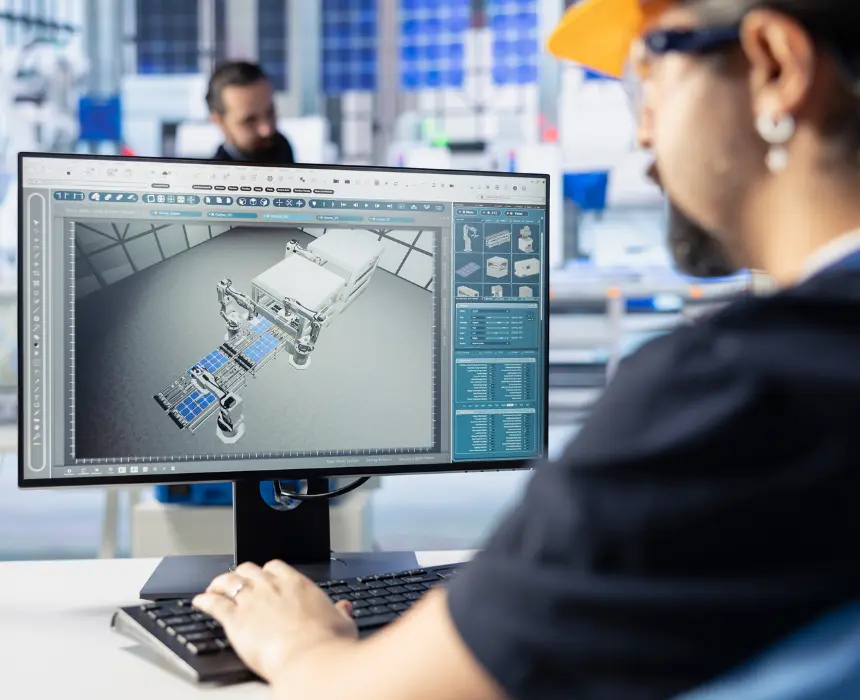
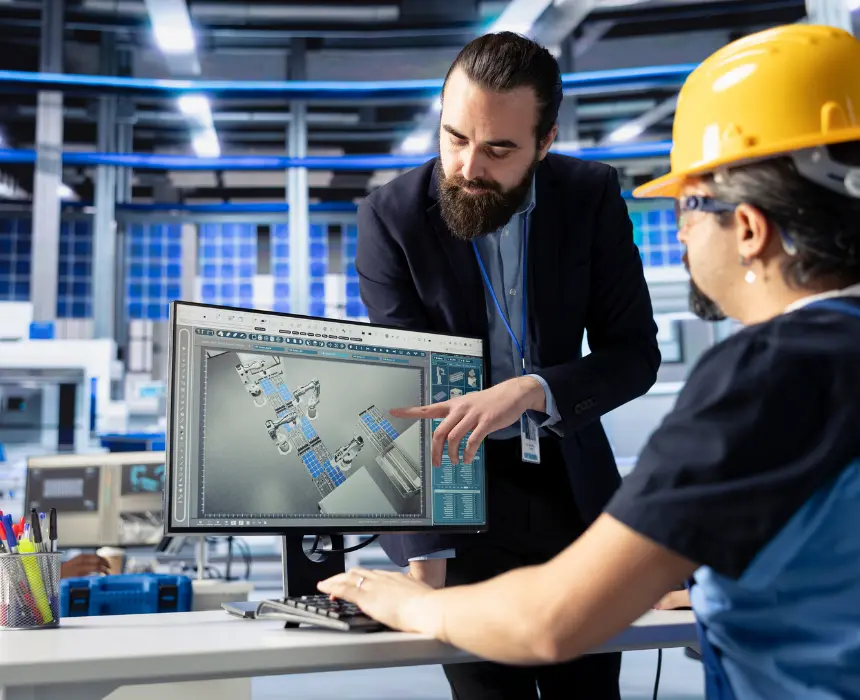
An HMI that operators can read and act on correctly in a high-stress plant environment is a safety and efficiency tool. An HMI that requires operators to hunt for information across cluttered screens filled with red alarms is a liability. We design and develop HMI software aligned with ISA-101 high-performance graphics principles — context-appropriate colour usage, clear abnormal situation highlighting, fast navigation to the most critical process views, and task-optimised screen layouts.
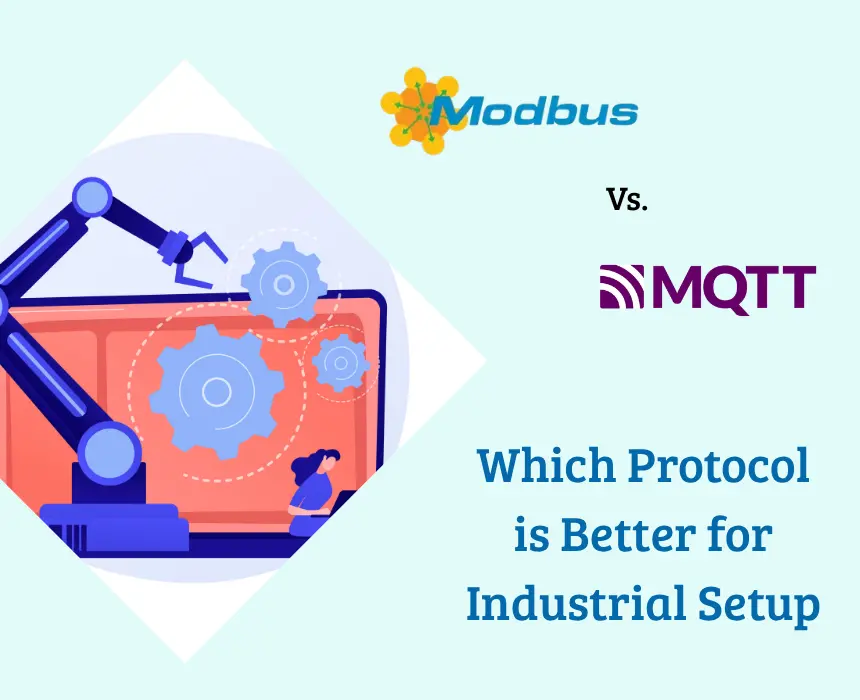
Industrial operations generate data from PLCs, RTUs, sensors, and machines across a factory floor but that data only drives decisions when it is collected reliably, contextualised correctly, and surfaced in real time to the people who need to act on it. We develop Industrial IoT platforms that connect to existing factory infrastructure through OPC-UA, Modbus TCP, MQTT, and proprietary PLC protocols, aggregate and normalise data at the edge, and push it to cloud backends for long-term storage, analytics, and cross-site visibility. We have built IIoT platforms covering OEE monitoring, energy consumption tracking, environmental compliance, and predictive maintenance for manufacturing, utilities, and process industries.
Unplanned downtime in manufacturing costs more than planned maintenance. Predictive maintenance software that monitors equipment health in real time and alerts maintenance teams before a failure occurs pays for its development cost in the first avoided breakdown. We build predictive maintenance applications that collect vibration, temperature, current, and pressure data from industrial sensors and machines, apply statistical and ML-based anomaly detection models trained on historical failure data, and surface actionable alerts through dashboards and mobile notifications.
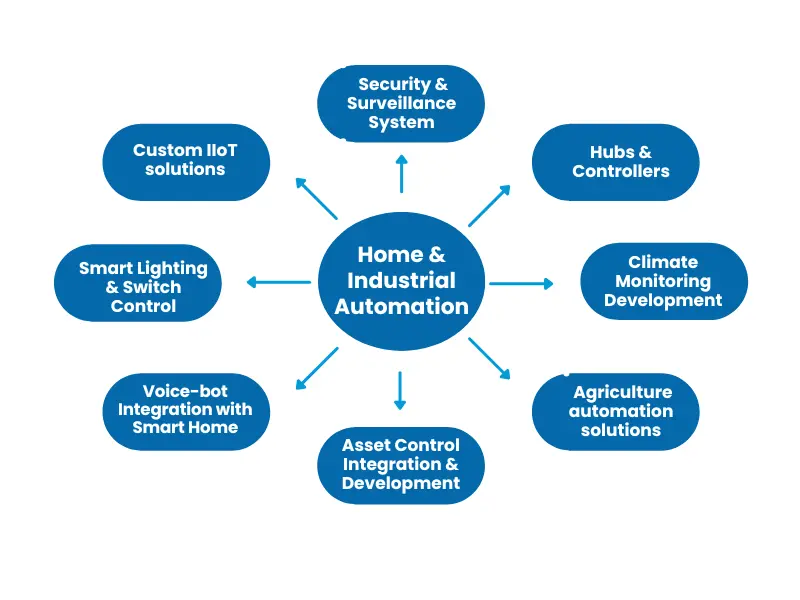
We build connected systems across the full stack - hardware, firmware, protocols, control software, and applications and we do it for both consumer smart home products and industrial environments. Most teams can handle one well. We handle both.
A smart home lighting automation that misfires is inconvenient. An industrial control system that misses a critical process event has operational and safety implications. We apply the right level of engineering rigour, reliability requirements, and protocol selection for the environment — consumer products designed for ease of setup and daily use, industrial systems designed for reliability under adverse conditions.
Matter, Thread, Zigbee, Z-Wave, OPC-UA, Modbus, LoRaWAN — each protocol exists because it is the right answer to a specific set of requirements. We select connectivity based on range, power budget, latency, reliability, infrastructure availability, and ecosystem compatibility. We do not default to Wi-Fi because it is familiar.
Cloud-dependent systems that lose functionality when the internet connection drops are not acceptable in smart home products users depend on for security, or in industrial facilities where connectivity is intermittent. We design systems with appropriate local processing at the gateway or edge - so core functions operate independently of cloud availability.
Your hardware designs, firmware, platform software, and system architecture are your IP. We sign a mutual NDA before any technical discussion and transfer the complete deliverable package at project completion. We retain nothing.
From consumer home automation apps and smart home companion apps to industrial platform development and operator interface design, our teams handle the specialist development work your connected system requires.
We develop custom IoT hardware, IoT firmware, IoT apps and AIoT integration services.
More DetailsWe develop healthcare and fitness wearables like vital monitoring devices, smart patches, trackers and smart watch.
More DetailsWe offer custom AI development, ML applications and embedded-AI integration.
More DetailsWe follow a structured, milestone-driven process from technical discovery to live deployment - covering hardware, firmware, control software, and applications in parallel so the system works end-to-end, not just layer by layer.
1
For smart home projects we map device types, connectivity environment, platform ecosystem targets, user personas, and voice assistant integration requirements. For industrial projects we map the existing PLC and sensor infrastructure, OT network topology, operational workflows, and the specific process visibility or control gaps the system needs to close.
2
We define the full system architecture - device layer, connectivity layer, control software layer, cloud layer, and application layer and build a proof of concept validating the riskiest technical assumptions before full development begins. For smart home: protocol range, device response latency, and automation rule execution. For industrial: OPC-UA or Modbus connectivity to existing PLCs, data throughput at production device counts, and edge processing feasibility.
3
Device PCB design, firmware development, protocol stack integration, OTA update system, and power management optimisation proceed in parallel — with hardware and firmware engineers working from the same architecture so integration issues surface on dev kits, not on first prototypes.
4
HMI screen development, home automation platform, smart lighting and surveillance system software, industrial IoT backend, cloud infrastructure, and data pipeline development run in parallel with device work — with integration testing on real hardware or simulator environments at every sprint.
5
End-to-end testing with production-representative hardware in conditions that reflect real deployment — multi-device environments, concurrent user load, network degradation scenarios, OTA update delivery, and failure recovery behaviour.
6
Production deployment, commissioning documentation, operator training materials, and a structured post-deployment support arrangement covering firmware updates, software patching, performance monitoring, and feature development.


Yes, always. We sign a mutual NDA before any technical discussion begins. Your system architecture, device designs, industrial process data, and business model are fully protected throughout the engagement. All hardware design files, firmware source code, platform software, cloud infrastructure configuration, and documentation are transferred to you at project completion - you retain 100% ownership of everything we build.
Yes. We implement Alexa Skills and Google Home Actions for smart home devices and platforms, covering device discovery, on/off and level control, scene activation, sensor querying, and custom interaction models for product-specific commands. For Matter-certified products, native Alexa and Google Home integration is provided through the Matter protocol itself without requiring separate skill or action development. For non-Matter products we implement the Alexa Smart Home Skill API and Google Smart Home Action API with OAuth 2.0 authentication and real-time device state sync.
Yes — and for smart home products used for security, lighting control, and climate management, local operation without internet dependency is a core design requirement rather than a nice-to-have. We design smart home hubs with local processing capability — the rule engine, device state management, and automation execution all run on the hub hardware. Cloud connectivity is used for remote access, OTA updates, and data sync - but local operations continue when the internet connection is unavailable. This is particularly important for Thread and Matter deployments where the Thread Border Router should maintain local fabric operation independently of cloud availability.
Yes, we develop both as end-to-end connected products. Smart lighting engagements typically cover LED driver hardware design, dimming firmware, Zigbee or Matter protocol integration, scene and circadian scheduling logic, hub or bridge software, and companion app development. Surveillance system engagements cover camera hardware and firmware with on-device AI for detection, secure video streaming and cloud storage pipelines, smart lock and sensor firmware, and companion apps with live view, event history, and alert management. Both product types share a common foundation - wireless protocol integration, cloud backend development, and mobile app work - which makes delivering them together faster and more cohesive than splitting the work across separate vendors.