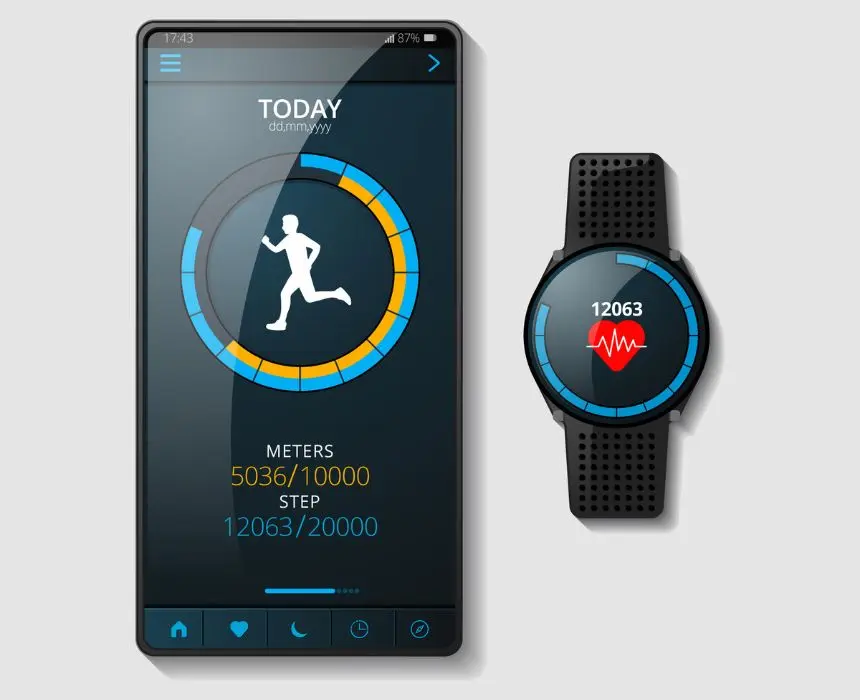
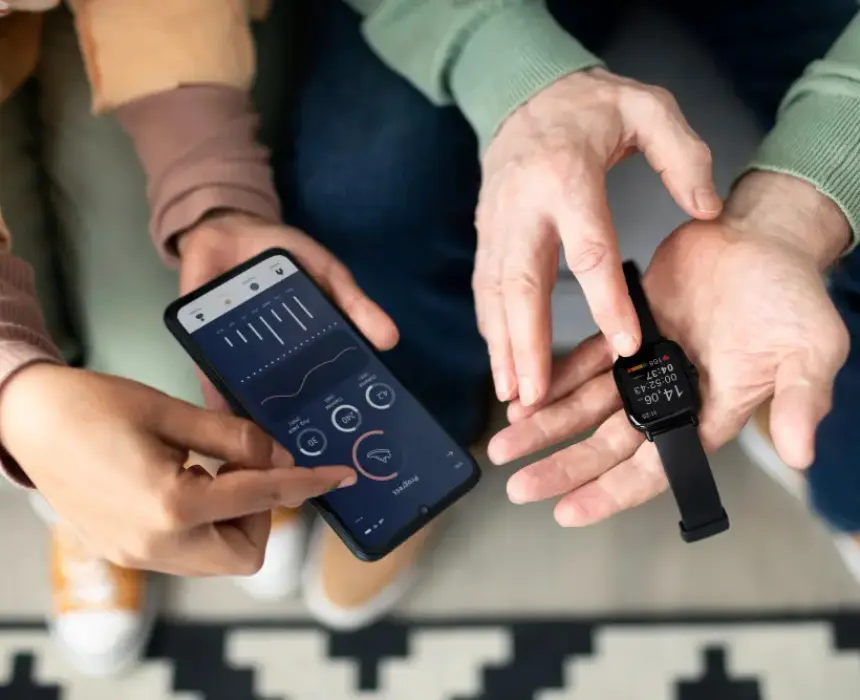
Our wearable development services include firmware, hardware design, and app integration. We build fitness trackers, health monitors, and smartwatches with BLE connectivity and sensor fusion algorithms. From concept to production we deliver wearables optimized for battery life, comfort and UX.
As a wearable development company, CoreFragment design custom PCBs, write power-efficient firmware, and integrate heart rate, motion, and biometric sensors. Our engineers handle bluetooth pairing, data synchronization, and companion apps for iOS, android, cross platform and desktop applications.
We specialize in low-power sensor processing, wireless charging integration, and real-time health monitoring algorithms. Your wearable needs accurate sensors, weeks of battery life, and seamless mobile connectivity. We provide complete hardware files, firmware source code, and app development.

Corefragment Technologies specializes in development of smart wearable devices in many industries like healthcare, wellness, fitness, animal care etc.
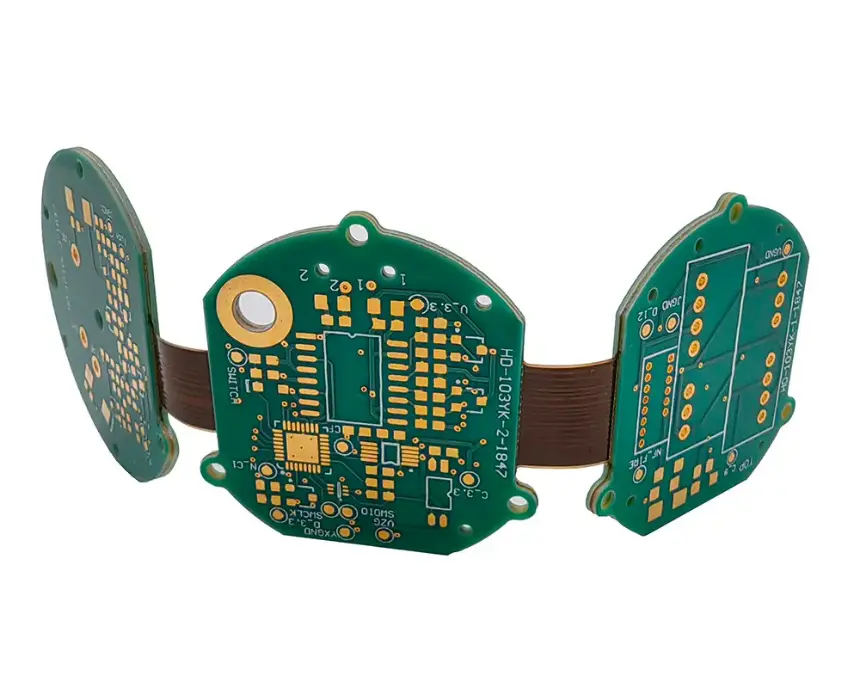
Wearable hardware has constraints that standard electronics do not - miniaturised form factors, flexible or rigid-flex PCB layouts, antenna placement that does not degrade when the device is worn against skin, power trees optimised for coin cells and small LiPo batteries, and component selection that survives the IP rating your product needs. We design wearable PCBs from schematic through layout, DFM analysis, prototype bring-up, and manufacturing handover - selecting components based on size, current draw, and supply chain availability. Most wearable designs reach a validated prototype in two hardware iterations.
Wearable firmware runs under constraints that desktop and mobile software never faces - microamps of average current draw, kilobytes of RAM, intermittent BLE connections that drop and reconnect, and sensor data that needs to be buffered correctly when the device can not transmit. We write wearable firmware in C and C++ on Nordic nRF52, STM32, and Silicon Labs EFR32 platforms - implementing sensor drivers, BLE GATT profiles, power management state machines, data logging, and OTA update systems. Every firmware deliverable includes unit tests, power profiling results, and documentation your team can maintain.
The BLE stack between a wearable device and its companion app is where most wearable products have their worst user experience - slow pairing, dropped connections, data loss during bursts of sensor activity, and background sync that drains the phone battery. We implement BLE 5.0 on the device side and the corresponding iOS Core Bluetooth and Android BLE API integration on the companion app - handling pairing flows, service discovery, characteristic reads and notifications, connection state recovery, and background data sync correctly. We have integrated accelerometers, gyroscopes, heart rate sensors, SpO2 sensors, GPS modules, temperature sensors, and custom analogue front ends into production wearable products.
Wearable devices generate continuous streams of sensor data and that data is only useful if the backend can receive it reliably, store it efficiently, process it in near real-time, and expose it through APIs that your app and any third-party integrations can consume. We build wearable cloud backends on AWS, GCP, and Azure - handling device registration, BLE data ingestion through the companion app, time-series storage, user account management, goal and notification logic, and third-party health platform integration with Apple HealthKit and Google Health Connect. We have built backends handling tens of millions of daily data points from large consumer wearable deployments.
The companion app is what most users interact with more than the device itself and a poorly built companion app makes an excellent wearable feel mediocre. We build companion apps for iOS and Android using React Native and native Swift and Kotlin - covering BLE device pairing and management, real-time data display, historical trend visualisation, goal setting, push notification delivery, and health platform sync with Apple HealthKit and Google Health Connect. We design companion app UX with the wearable data model at the centre, not as an afterthought. Users should understand what their device is telling them without reading a manual.
A wearable product that does not clearly communicate its value to a user in the first 10 minutes of use gets returned. We run product strategy engagements that define the core use case, the sensor set that actually supports it, the data model that makes the metrics meaningful, and the UX flows on-device and in the companion app - that surface insights without overwhelming. We have helped wearable teams cut their initial feature set by 40% and ship faster, with better adoption, by focusing on the core interaction rather than matching a competitor feature checklist.
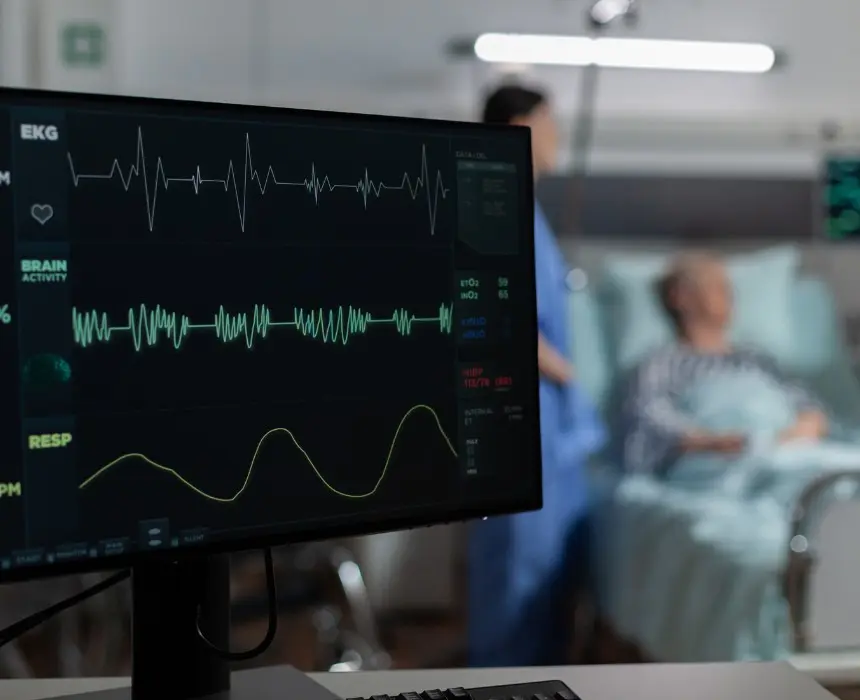
Medical wearables - ECG patches, continuous glucose monitor companions, blood pressure wristbands, pulse oximetry monitors, and remote patient monitoring devices - require sensor accuracy, signal quality, and reliability that consumer fitness wearables do not need to achieve. We develop medical wearable hardware with custom analogue front ends for ECG, EDA, EMG, and photoplethysmography signals, firmware with medical-grade signal processing and artefact rejection, BLE streaming at the data rates clinical use cases require, and clinical dashboards that display wearable data alongside patient record context. We assist in building solutions that meet the standards your medical wearable environment requires, and work alongside your regulatory affairs team throughout the process.
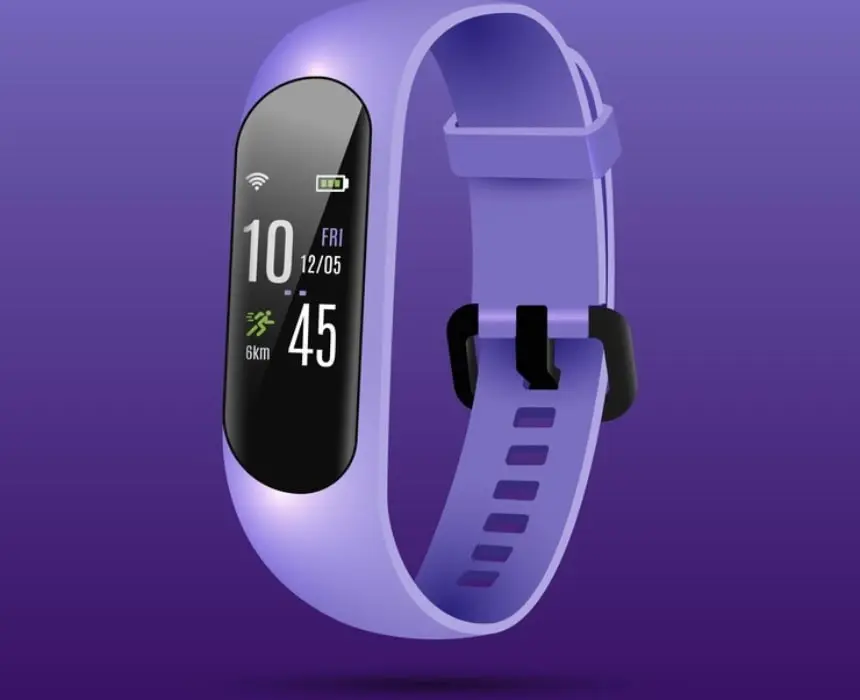
Smart bands sit at the intersection of miniaturised hardware, aggressive battery life targets, and a companion app experience that needs to feel effortless — because if wearing the band becomes inconvenient, users stop wearing it. We develop smart bands end-to-end: custom PCB design with rigid-flex layouts, ultra-low-power firmware on Nordic nRF52 platforms, BLE GATT implementation for heart rate, activity, and sleep data, coin cell or small LiPo power management targeting multi-week battery life, and companion apps for iOS and Android with HealthKit and Google Health Connect integration. We have shipped consumer smart bands at retail volume and understand what distinguishes a product that gets returned from one that earns a 4-star review.
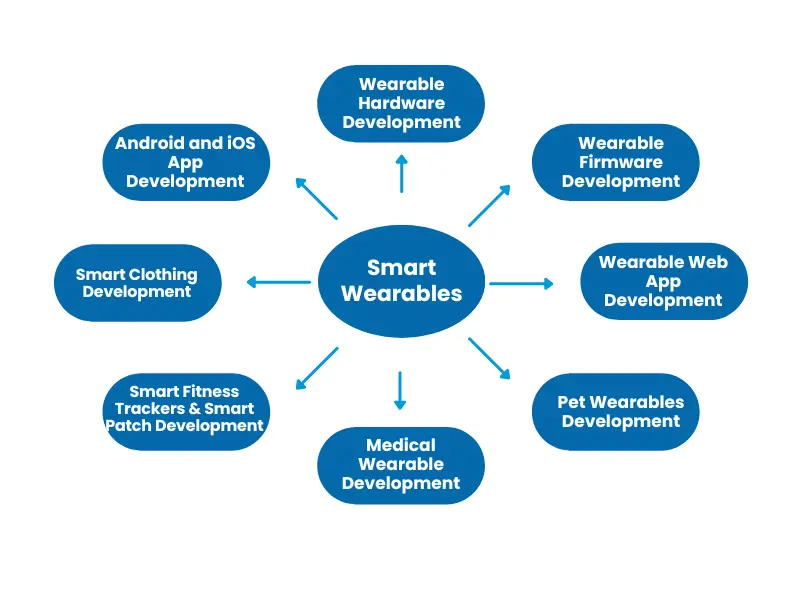
We build complete wearable products - hardware, firmware, connectivity, cloud, and app - as a single coordinated team. The integration problems that cause most wearable project delays happen when those layers are owned by different vendors who do not talk to each other. We remove that problem by owning the full stack.
Most wearable companion apps are designed before the firmware data model is finalised — which produces UX that does not match the actual sensor capabilities. We define the data model and companion app UX together, so what users see in the app accurately reflects what the device measures, at the right update frequency, without misleading them.
Getting a validated wearable design into production without assembly issues requires more than handing Gerbers to a CM. We prepare the complete manufacturing package, liaise with your contract manufacturer to resolve DFM queries before the first production run, and support first article inspection so initial production units match the validated design.
BLE behaves differently across iOS versions, Android manufacturers, and OS updates. A pairing flow that works on an iPhone 15 and a Samsung Galaxy S24 in the lab may fail on a Pixel 7 running Android 14 in the real world. We test BLE connectivity across a representative device matrix throughout development - not just before launch.
Your hardware design files, firmware source code, app code, and cloud infrastructure configuration are your IP. We sign a mutual NDA before any technical discussion and transfer the complete deliverable package at project completion. We retain nothing.
Battery life is not determined by firmware optimisation at the end of development - it is determined by hardware component selection, power domain design, sensor duty cycling strategy, and BLE connection interval, all working together. We manage power budget as a cross-layer constraint from the architecture phase, and we validate it with real current measurements on prototype hardware before declaring the target achieved.
Wearable firmware bugs that appear at prototype stage are often hardware decisions made without firmware input — a peripheral that shares an interrupt line incorrectly, a power domain that can not be gated at the right time, a BLE antenna placed where body attenuation kills range. Our hardware and firmware engineers define the design together before either team begins production work.
We offer embedded systems, IoT, app development services along with AI - ML development.
We develop custom mobile app in IoT, wearables, healthcare in android, iOS and cross platform.
More DetailsWe develop custom web app for industries like healthcare, manufacturing, consumer electronics products etc.
More DetailsWe develop custom IoT hardware, IoT firmware, IoT apps and AIoT integration services.
More DetailsWe offer custom AI development, ML applications and embedded-AI integration.
More DetailsWe develop custom IoT firmware, OTA integration, linux and RTOS based development, BSP development, hardware-firmware integration, kernel and bootloader development.
More DetailsWe develop custom hardware, from schematic design to layout design, BOM optimization, EOL management and hardware design review.
More DetailsWe follow a structured, milestone-driven wearable development process from technical discovery to production shipment - hardware, firmware, app, and cloud developed in parallel so the product works as a system, not as separate components integrated at the last minute.
1
We start with a structured discovery session covering your wearable form factor, target user, key sensors, connectivity requirements, battery life target, and go-to-market timeline. We build a proof of concept on a development kit — validating sensor data quality, BLE range, battery draw, and companion app connectivity — before committing to custom hardware. Most PoCs are complete within 3 to 4 weeks and answer the technical questions that would otherwise surface as expensive surprises at prototype stage.
2
We define the hardware architecture - MCU selection, sensor set, power tree, antenna strategy, PCB stackup, and enclosure constraints - alongside the firmware architecture: RTOS vs bare-metal, BLE GATT profile design, sensor driver interfaces, power management model, and OTA update strategy. Hardware and firmware engineers define these together so peripheral pinouts and power management decisions are aligned before either team begins production work.
3
PCB schematic, layout, and DFM analysis proceed in parallel with firmware development — sensor drivers, BLE stack integration, power management state machine, data logging, and OTA bootloader. We coordinate integration points weekly so firmware is tested on real hardware as soon as first prototypes are available, not at the end of a long firmware sprint.
4
iOS and Android companion app development and cloud backend development run in parallel with hardware and firmware — using a BLE simulator to develop and test app-side integration before physical prototypes are ready. API contracts between the app and backend are defined and agreed before either team begins implementation.
5
End-to-end system testing with production-representative hardware — BLE pairing reliability across device and OS combinations, sensor data accuracy validation, battery life characterisation under real usage patterns, OTA update delivery and rollback, and usability testing with representative users wearing the device through real daily activities.
6
Full manufacturing handover package — Gerber files, BOM with approved vendor list, assembly drawings, firmware flashing procedure, test jig specification, and QC pass/fail criteria. Cloud infrastructure production deployment, app store submission management, and a structured post-launch support arrangement covering firmware updates, app maintenance, and backend scaling.


We act as your development partner, hence IP and product ownership is exclusively yours. We sign strict NDA for the same before you share your exact business requirements and idea.
We have experienced developers for wearables design. We have worked in medical wearables sector to pet care wearables. Our team has solved complex challenges in medical wearables accuracy and real time tracking. You can know more about the same by contacting us.
The cost of wearable device and app design depends on factors like applications, technology selection, complexity, business requirements etc. If you want to know the quote, you can share the basic details on our email ID.
CoreFragment has expertise in designing and developing various wearable devices, including battery-operated wearables with sensors, activity trackers, fitness bands, vital sign monitors, medical wearables, pet trackers and BLE-based asset trackers.